10 Fachadas Contemporáneas Inspiradoras para Definir 2026

Los exteriores residenciales contemporáneos son mucho más que una primera impresión; son una declaración de propósito, una mezcla de ciencia de materiales y un reflejo directo de la vida moderna. Esto no es simplemente una galería de casas hermosas. Es una deconstrucción estratégica de los principios que definen las fachadas residenciales más convincentes de hoy. Vamos más allá de la estética superficial para proporcionar una guía táctica para arquitectos, diseñadores y profesionales inmobiliarios.
Nuestro análisis disecciona 10 enfoques distintos del diseño exterior contemporáneo, desde la pureza minimalista y el chic industrial hasta las fachadas verdes sostenibles y las aplicaciones cálidas de madera natural. Cada ejemplo se desglosa en sus componentes principales: materiales, forma, iluminación e intención estratégica. Identificamos las opciones específicas que crean una declaración arquitectónica cohesiva y poderosa.
Lo más importante es que esta guía proporciona conclusiones prácticas que puede aplicar directamente a sus proyectos. Para cada estilo, encontrará:
- Análisis de Características Clave: Un desglose de materiales, líneas de techo y fenestración.
- Perspectivas Estratégicas: El "por qué" detrás de las decisiones de diseño.
- Indicaciones Prácticas: Lenguaje específico para generar renders precisos y fotorrealistas con herramientas de IA.
Ya sea que esté presentando conceptos a un cliente, desarrollando materiales de marketing o refinando su propio lenguaje de diseño, esta lista seleccionada lo equipará con la información necesaria para crear y comunicar exteriores residenciales contemporáneos sofisticados. Nuestro objetivo es cerrar la brecha entre la inspiración y la ejecución, mostrándole no solo qué construir, sino cómo visualizarlo con precisión y claridad.
1. Fachadas Minimalistas Modernas
Las fachadas minimalistas modernas representan el pico de "menos es más" en exteriores residenciales contemporáneos. Esta filosofía de diseño defiende la simplicidad y la función, eliminando toda ornamentación no esencial para enfatizar líneas limpias, formas geométricas y superficies sin desorden. El resultado es una estética sofisticada y atemporal donde los materiales de alta calidad y la construcción precisa hablan por sí solos. Este enfoque crea una declaración visual poderosa a través de la moderación, enfocándose en líneas de visión abiertas y una conexión armoniosa entre la estructura y su entorno natural.
Este estilo, popularizado por pioneros como Richard Neutra y Tadao Ando, se basa en gran medida en una paleta de colores neutral. Los tonos de blanco, gris, negro y beige dominan, permitiendo que las texturas de materiales como hormigón liso, vidrio, acero y madera natural proporcionen profundidad e interés. Comprender sus preferencias de diseño personal es clave para lograr este look; puede descubrir su estilo de diseño de casa para ver si el minimalismo se alinea con su visión.
Análisis Estratégico
La estrategia central detrás de las fachadas minimalistas es la honestidad material y claridad estructural. En lugar de ocultar elementos de construcción, este estilo los celebra. Una línea de techo plana no es solo una cubierta; es un plano horizontal fuerte que define la silueta de la casa contra el cielo. Los grandes paneles de vidrio sin marco no son solo ventanas; son vacíos intencionales que difuminan la línea entre los espacios de vida interior y exterior.
El éxito de un exterior minimalista radica en su precisión. Cada junta, superficie y línea de sombra se planifica y ejecuta meticulosamente, ya que no hay adornos decorativos para ocultar imperfecciones.
Conclusiones Prácticas
Para replicar esta estética, enfóquese en una paleta de materiales seleccionada y aproveche la tecnología para la visualización.
- Selección de Materiales: Limite sus opciones a 2-3 materiales primarios. Considere hormigón moldeado en tablero para textura, baldosas de porcelana de gran formato para un acabado sin costuras y revestimiento vertical de cedro o madera Accoya para calidez.
- Fenestración: Priorice ventanas de panel fijo grande y paredes de vidrio corredizo con perfil mínimo. Agrupe las ventanas para crear composiciones geométricas unificadas en lugar de dispersarlas por toda la fachada.
- Visualizar con IA: Utilice una herramienta de renderizado como MoldaSpace para probar combinaciones de materiales instantáneamente. Genere variaciones que muestren un acabado de hormigón mate versus un estuco liso, o vea cómo diferentes tintes de madera interactúan con un acabado de metal oscuro.
- Iluminación y Sombra: Modele escenarios de iluminación en diferentes momentos del día. Una característica clave de los exteriores residenciales contemporáneos minimalistas es cómo las líneas nítidas proyectan sombras dramáticas y cambiantes, agregando carácter dinámico a las formas simples.
2. Chic Industrial con Materiales Expuestos
Los exteriores chic industrial celebran la belleza cruda y sin terminar de los materiales utilitarios, transformándolos en una estética residencial sofisticada. Este estilo se inspira en almacenes, fábricas y lofts urbanos, enfatizando la honestidad estructural al exponer elementos como vigas de acero, hormigón crudo y ladrillo recuperado. El resultado es un diseño robusto y rico en carácter que fusiona la rudeza histórica con el refinamiento moderno, creando exteriores residenciales contemporáneos dinámicos populares tanto en proyectos de infill urbano como en nuevas construcciones independientes.
Este enfoque, visto en conversiones icónicas de lofts de Tribeca y proyectos modernos de firmas como Shim-Sutcliffe Architects, encuentra elegancia en la imperfección. Es un lenguaje de diseño que valora la textura, la pátina y la historia que los materiales cuentan con el tiempo sobre la perfección. La combinación de superficies duras y crudas con vidrio expansivo y líneas limpias produce un contraste poderoso que es tanto imponente como habitable, anclando la casa con un sentido de historia y permanencia.
Análisis Estratégico
La estrategia central es la autenticidad estética a través de la expresión estructural. En lugar de ocultar el esqueleto del edificio, este diseño lo expone completamente. Una viga I de acero no es solo soporte; es un elemento visual primario. Una pared de hormigón moldeado en tablero no es solo estructura; es una superficie texturizada y artística. Este estilo intencionalmente destaca las juntas, pernos y soldaduras que mantienen la casa unida.
El éxito de un exterior industrial depende de equilibrar materiales crudos y ásperos con detalles refinados y modernos. El contraste entre ladrillo envejecido y un sistema de ventanas de marco negro nítido es lo que eleva el diseño de puramente utilitario a intencionalmente chic.
Conclusiones Prácticas
Para lograr un look chic industrial, enfóquese en una paleta de materiales auténticos y use herramientas de visualización para perfeccionar el equilibrio entre elementos crudos y refinados.
- Selección de Materiales: Combine 2-3 materiales industriales principales. Considere acero Corten por su pátina evolutiva, ladrillo recuperado por su textura histórica y paneles de hormigón de acabado liso como contrapunto moderno.
- Fenestración: Utilice ventanas grandes de estilo fabril con travesaños de metal oscuro (a menudo acero o aluminio) dispuestos en patrones de cuadrícula. Estas ventanas inundan los interiores de luz y rompen el peso visual de los materiales pesados.
- Visualizar con IA: Utilice una herramienta de renderizado como MoldaSpace para simular el proceso de envejecimiento de los materiales. Genere variaciones que muestren la diferencia entre acero Corten nuevo y su estado oxidado y envejecido, o contraste un techo de metal mate con marcos de ventana brillantes.
- Iluminación y Suavización: Cree renderizados nocturnos para ver cómo la iluminación estratégica puede resaltar las texturas del ladrillo y el hormigón. Utilice la herramienta para modelar cómo el paisajismo suave, como pastos ornamentales o enredaderas trepadoras, puede suavizar los bordes duros de los exteriores residenciales contemporáneos industriales.
3. Pabellones de Vidrio y Acero
Los pabellones de vidrio y acero son la expresión definitiva de transparencia y ligereza estructural en exteriores residenciales contemporáneos. Este estilo arquitectónico utiliza vidrio de alto rendimiento expansivo soportado por un marco de acero esbelto para disolver los límites entre el interior y el paisaje circundante. El diseño crea un efecto de una casa que flota en la naturaleza, maximizando la luz natural y transformando la estructura en una vitrina que muestra su interior y ocupantes.
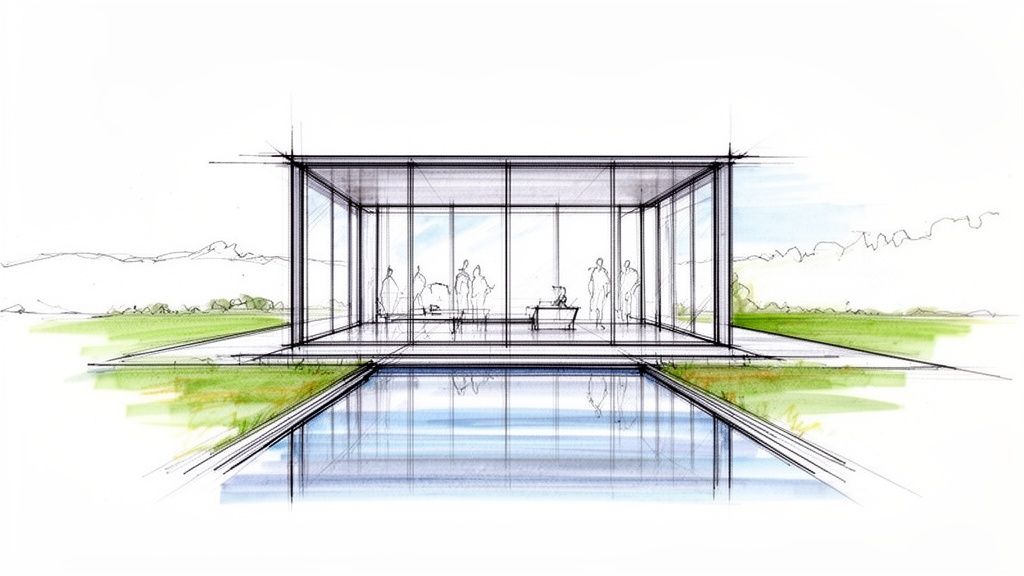
Pionero de visionarios como Ludwig Mies van der Rohe con su icónica Casa Farnsworth, este enfoque prioriza un flujo visual sin costuras. Las interpretaciones modernas, vistas en propiedades del Silicon Valley y villas suizas en laderas, llevan el concepto más allá con tecnología de vidrio avanzada. La estructura en sí se convierte en una escultura minimalista, donde las "paredes" son vistas siempre cambiantes del exterior, lo que la convierte en uno de los exteriores residenciales contemporáneos más inmersivos.
Análisis Estratégico
La estrategia central es la desmaterialización, donde las barreras físicas de la casa se hacen parecer lo más insubstancial posible. El marco de acero proporciona el soporte estructural necesario pero se reduce a su expresión más mínima: una cuadrícula limpia y elegante. El vidrio no es meramente un relleno sino el elemento primario de la fachada, responsable de definir espacio, luz y experiencia.
En un pabellón de vidrio, el exterior no es una fachada sino un marco. El paisaje se convierte en el "papel tapiz", y el carácter de la casa cambia dramáticamente de día a noche.
Conclusiones Prácticas
Para lograr este look, el enfoque debe estar en la interacción entre estructura, vidrio y luz, que se puede perfeccionar a través de la visualización.
- Expresión Estructural: Mantenga el marco de acero elegante y honesto. Utilice vigas I de perfil delgado o secciones de caja y exprese las conexiones claramente. Pinte el acero en un color recesivo oscuro como carbón o negro para hacerlo retroceder visualmente.
- Especificación de Vidrio: Opte por vidrio ultra transparente de bajo hierro para máxima transparencia. Considere unidades de triple panel para rendimiento térmico y use estratégicamente recubrimientos reflectantes o tintados para manejar la ganancia solar y la privacidad sin sacrificar la vista.
- Visualizar Transparencia con IA: Utilice una herramienta como MoldaSpace para generar renderizados de día y noche. Modele cómo la iluminación interior hace que la casa brille como una linterna después del anochecer. Pruebe cómo diferentes esquemas de diseño interior y disposiciones de muebles se ven desde el exterior.
- Enmarcar el Paisaje: Genere vistas desde dentro del modelo virtual mirando hacia afuera. Ajuste la colocación de travesaños de ventana para enmarcar perfectamente características clave del paisaje como un árbol maduro, una montaña distante o una piscina reflectante.
4. Fachadas de Materiales Mixtos
Las fachadas de materiales mixtos son una piedra angular de los exteriores residenciales contemporáneos dinámicos, combinando texturas y colores diversos para crear interés visual y profundidad. Esta estrategia de diseño va más allá de superficies monolíticas, combinando artísticamente materiales como madera natural, piedra áspera, metal elegante y yeso liso. El enfoque permite un ritmo visual sofisticado, destacando características arquitectónicas y creando una casa que se siente tanto arraigada como moderna. Ofrece una forma poderosa de equilibrar la estética con el rendimiento, usando materiales duraderos donde sea necesario mientras se agrega calidez y carácter en otras áreas.
Esta tendencia es prominente en el diseño contemporáneo global, desde casas escandinavas que combinan madera cálida con metal oscuro hasta residencias australianas que contrastan madera envejecida contra hormigón fresco. La clave es crear una composición que se sienta intencional y armoniosa en lugar de desarticulada. Al seleccionar y combinar cuidadosamente materiales, los arquitectos pueden crear una fachada de casa única que cuente una historia visual rica.
Análisis Estratégico
La estrategia central detrás de las fachadas de materiales mixtos es el contraste textural y jerarquía material. Este enfoque utiliza las cualidades inherentes de diferentes materiales para definir forma, función y peso visual. Por ejemplo, una base de piedra pesada puede anclar una casa a su paisaje, mientras que un revestimiento de madera o metal más ligero en pisos superiores puede crear una sensación de levedad. Esta estratificación intencional guía el ojo y desglosa la masa del edificio en componentes más digeribles y atractivos.
El arte de un exterior de materiales mixtos exitoso no está solo en la combinación, sino en la transición. El detalle en la unión donde la madera se encuentra con la piedra, o el metal se encuentra con el vidrio, es lo que eleva el diseño de un simple collage a una declaración arquitectónica cohesiva.
Conclusiones Prácticas
Para implementar efectivamente esta estética, enfóquese en crear una composición equilibrada y use herramientas digitales para perfeccionar los detalles.
- Selección de Materiales: Elija un material primario para cubrir el 60-70% de la fachada y 1-2 materiales de acento para el resto. Considere combinaciones como revestimiento vertical de cedro con paneles de metal de costura de pie oscuro y una base de hormigón moldeado en tablero.
- Crear una Jerarquía: Utilice materiales más pesados y texturizados como piedra o ladrillo para el piso inferior o elementos de cimentación. Reserve materiales más ligeros como madera o estuco liso para niveles superiores o secciones en voladizo para mejorar las formas arquitectónicas.
- Visualizar con IA: Utilice una herramienta de renderizado como MoldaSpace para probar rápidamente combinaciones de materiales. Genere variaciones que muestren diferentes proporciones, como una división madera-piedra 60/40 versus 30/70, para encontrar el equilibrio óptimo para su diseño.
- Detallar las Transiciones: Modele vistas de cerca para perfeccionar las juntas entre materiales. Explore cómo un canal rebajado entre madera y yeso crea una línea de sombra limpia, o cómo un borde de metal nítido puede terminar limpiamente un muro de piedra.
5. Fachadas Sostenibles y Verdes
Las fachadas sostenibles y verdes son una característica definitoria de los exteriores residenciales contemporáneos de visión de futuro, transformando la responsabilidad ambiental de una característica oculta a un elemento estético central. Este enfoque integra sistemas vivos y materiales ecológicos directamente en la envolvente del edificio. Características como jardines verticales, techos verdes, paneles solares integrados y revestimiento de madera de origen sostenible no son solo complementos; son fundamentales para la identidad arquitectónica. El resultado es una casa que respira, contribuye activamente a su ecosistema y hace una declaración poderosa sobre la vida consciente.
Este movimiento, popularizado por arquitectos como Stefano Boeri con su icónico Bosco Verticale, trata los edificios como organismos vivos. El diseño no solo minimiza el impacto ambiental sino que también mejora la biodiversidad, mejora la calidad del aire y proporciona aislamiento natural. Fusiona soluciones de alta tecnología con principios de diseño biofílico para crear estructuras que son tanto visualmente impresionantes como ecológicamente restauradoras, una consideración clave para los mercados de lujo moderno y convencionales.
Análisis Estratégico
La estrategia central detrás de una fachada sostenible es la integración ecológica y estética impulsada por el rendimiento. El diseño muestra visiblemente su función ambiental. Una pared verde no es meramente decoración; es un sistema vivo que enfría el edificio, filtra el aire y gestiona el agua de lluvia. Los paneles solares no se colocan torpemente sino que se integran sin costuras en la línea del techo o la fachada, convirtiéndose en un patrón geométrico deliberado.
El éxito de un exterior verde se mide por su vitalidad y seamlessness. El diseño debe apoyar la vida de sus componentes biológicos mientras asegura el rendimiento técnico y la longevidad del edificio.
Conclusiones Prácticas
Para crear una fachada sostenible convincente, enfóquese en integrar sistemas vivos y visualizar su evolución a lo largo del tiempo.
- Selección de Materiales: Priorice materiales con fuertes credenciales verdes. Utilice madera certificada FSC como Accoya o Kebony para revestimiento, acero reciclado para elementos estructurales y piedra de origen local.
- Sistemas Vivos: Incorpore un sistema de jardín vertical o techo verde. Seleccione especies de plantas nativas que se adapten al clima local para minimizar el mantenimiento y el consumo de agua.
- Visualizar con IA: Utilice una herramienta como MoldaSpace para modelar la evolución de la fachada. Genere renderizados que muestren una pared verde en diferentes etapas de crecimiento, desde la plantación inicial hasta la madurez completa. Pruebe cómo los paneles solares se ven con diferentes materiales de revestimiento, como metal oscuro o madera clara.
- Simulación Estacional e Iluminación: Cree variaciones que muestren cómo la fachada cambia con las estaciones, desde verdes veranos exuberantes hasta formas más escuetas en invierno. Modele escenarios de día y noche para destacar cómo la iluminación integrada puede mostrar la textura de una pared viva después del anochecer.
6. Contemporáneo Cálido con Madera Natural
El diseño contemporáneo cálido suaviza la severidad a menudo asociada con el minimalismo al introducir la textura rica y orgánica de la madera natural. Este enfoque equilibra líneas limpias y formas modernas con la calidez inherente de la madera, creando un exterior que se siente tanto sofisticado como profundamente acogedor. Al integrar materiales como cedro, roble o maderas modificadas térmicamente, estos exteriores residenciales contemporáneos establecen una conexión fuerte con la naturaleza y evocan una sensación de calma y comodidad, alejándose de una estética puramente estéril.
Este estilo encuentra sus raíces en filosofías de diseño escandinavo y japonés, a menudo fusionándolas en un look "Japandi" que valora la simplicidad, la artesanía y los materiales naturales. Es una respuesta al deseo de casas que no son solo visualmente impresionantes sino también emocionalmente resonantes. La madera se puede usar como revestimiento primario, un acento estratégico en sofitos y entradas, o como elementos de pantalla delicados que juegan con la luz y la sombra, agregando capas de interés visual.
Análisis Estratégico
La estrategia central aquí es el contraste táctil y conexión emocional. La madera se introduce no solo por su color sino por su grano, textura y capacidad de envejecer con gracia. Sirve como contrapunto natural a materiales más fríos como hormigón, acero y vidrio, creando una composición equilibrada y armoniosa. La calidez de la madera suaviza la geometría dura de la arquitectura moderna, haciendo que la casa se sienta más accesible y a escala humana.
El éxito de un exterior contemporáneo cálido radica en la integración reflexiva de la madera, donde destaca características arquitectónicas y mejora la relación de la casa con su paisaje.
Conclusiones Prácticas
Para lograr esta estética, enfóquese en la especie de madera y cómo interactúa con otros materiales e iluminación.
- Selección de Materiales: Elija maderas conocidas por su durabilidad y belleza, como Cedro Rojo Occidental, Ipe o Accoya. Combínelas con materiales contrastantes como revestimiento de metal oscuro, estuco blanco liso o paneles de carbón de gran formato para que la calidez de la madera destaque.
- Aplicación: Utilice madera para definir volúmenes específicos. Considere una aplicación de pantalla de lluvia vertical para un look moderno, o úsela para envolver un elemento arquitectónico prominente como un porche cubierto o un segundo piso en voladizo.
- Visualizar con IA: Utilice una herramienta como MoldaSpace para experimentar con diferentes especies de madera y acabados. Genere renderizados que muestren cómo un fresno claro versus un nogal rico cambia completamente el estado de ánimo de la fachada. Pruebe tintes y vea cómo la madera aparecerá cuando se envejezca con el tiempo.
- Iluminación y Grano: Modele cómo la luz natural interactúa con el grano de la madera en diferentes momentos del día. Una característica clave de estos exteriores residenciales contemporáneos es cómo la luz puede dar vida a la textura de la madera, agregando un elemento dinámico y natural al diseño.
7. Formas Geométricas y Angulares
Las formas geométricas y angulares empujan los límites del diseño residencial convencional, tratando el exterior de la casa como una obra maestra escultural. Este enfoque utiliza líneas audaces y asimétricas, voladizos dramáticos y volúmenes facetados para crear una sensación de movimiento y tensión visual. En lugar de depender de formas rectangulares tradicionales, estos exteriores residenciales contemporáneos abrazan ángulos inesperados y proporciones dinámicas, resultando en estructuras que son tanto espacios habitables como obras de arte.
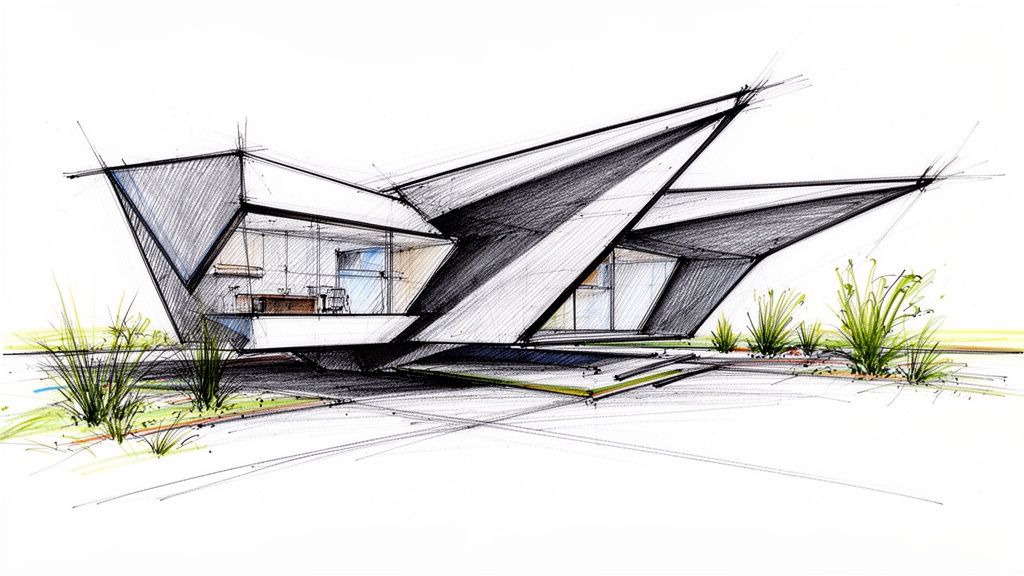
Este estilo de vanguardia, fuertemente influenciado por el trabajo de arquitectos deconstructivistas como Zaha Hadid y Daniel Libeskind, desafía la percepción del espacio del espectador. Materiales como paneles de metal, vidrio y hormigón se utilizan a menudo para definir los planos agudos y crear una estética cohesiva y moderna. Comprender cómo se perciben estas formas desde diferentes puntos de vista es crucial; puede dominar esto estudiando los principios del dibujo en perspectiva de casas para visualizar mejor diseños complejos.
Análisis Estratégico
La estrategia central es crear drama arquitectónico a través de composición volumétrica. Esto no es solo agregar un techo angulado; se trata de componer toda la masa del edificio con volúmenes geométricos entrelazados, chocantes o que se intersectan. Las secciones en voladizo que parecen desafiar la gravedad, las recesiones de ventanas anguladas agudamente y las paredes facetadas trabajan juntas para crear una silueta dinámica y memorable.
El poder de un exterior geométrico proviene de su complejidad controlada. Cada ángulo y plano se coloca deliberadamente para interactuar con la luz, proyectar sombras dramáticas y guiar el ojo alrededor de la estructura.
Conclusiones Prácticas
Para diseñar efectivamente con formas geométricas, enfóquese en composición, contraste material y visualización avanzada.
- Definir Formas Dominantes: Comience con un volumen geométrico primario y luego agregue elementos que se intersecten o sean sustractivos. Por ejemplo, una base rectangular nítida puede ser perforada por un piso superior triangular revestido en zinc.
- Cohesión Material: Utilice materiales para enfatizar la geometría. Aplique un solo material, como metal de costura de pie negro, a un volumen angular completo para hacerlo leer como un objeto escultural único.
- Visualizar en 3D: Utilice una herramienta como MoldaSpace para explorar el diseño desde cada ángulo concebible. Genere perspectivas aéreas para entender la composición geométrica de la cubierta y cree variaciones de 360 grados para ver cómo las formas interactúan.
- Modelar Luz y Sombra: Genere renderizados al amanecer, mediodía y atardecer. Esto revelará cómo los ángulos agudos crean un patrón siempre cambiante de luz y sombra, que es un elemento expresivo clave de este estilo.
8. Líneas Horizontales y Ventanas Cinta
Enfatizar líneas horizontales fuertes es un sello distintivo de muchos exteriores residenciales contemporáneos icónicos, creando una sensación de estabilidad arraigada y conexión expansiva con el paisaje. Este principio de diseño utiliza voladizos de techo extendidos, patrones de materiales lineales y, lo más notable, ventanas cinta continuas para atraer el ojo hacia afuera. Inspirado por los diseños de la Escuela de las Praderas de Frank Lloyd Wright y el modernismo de mediados de siglo elegante de Richard Neutra, este enfoque se siente tanto clásico como distintamente actual.
Este estilo es particularmente efectivo en entornos con vistas panorámicas, como laderas montañosas o praderas abiertas, donde las ventanas cinta pueden enmarcar el paisaje como una toma cinematográfica panorámica. Los elementos horizontales funcionan para anclar la estructura a su sitio, haciéndola parecer una extensión natural del terreno en lugar de un objeto colocado sobre él. La estética resultante es la de una calma sofisticada, donde la arquitectura dirige la atención a la belleza de sus alrededores.
Análisis Estratégico
La estrategia central aquí es dirigir la mirada y enmarcar la vista. A diferencia de las aberturas de ventana perforadas que ofrecen vislumbres discretos, las ventanas cinta crean una experiencia panorámica ininterrumpida desde el interior. Este acristalamiento continuo desglosa la masa vertical de una pared, haciendo que la estructura se sienta más ligera y transparente, mientras que las líneas horizontales fuertes del techo y el revestimiento la mantienen firmemente arraigada.
El poder de este diseño radica en su capacidad de crear un flujo visual sin costuras. La casa no solo se sienta en el paisaje; se involucra activamente con él controlando y curando la perspectiva.
Conclusiones Prácticas
Para implementar esta estética, enfóquese en composición arquitectónica y la interacción entre sólido y vacío.
- Bandas de Materiales: Utilice materiales de revestimiento horizontal contrastantes para reforzar el efecto lineal. Combine bandas de estuco liso con listones de madera horizontales delgados o paneles de metal oscuro para crear estratificación visual.
- Techo y Voladizos: Diseñe techos planos o de baja pendiente con voladizos profundos y en voladizo. Estos no solo protegen las ventanas cinta de la luz solar directa sino que también proyectan sombras largas y dramáticas que acentúan la forma horizontal de la casa.
- Visualizar la Vista: Utilice una herramienta como MoldaSpace para modelar con precisión cómo las ventanas cinta enmarcarán características específicas del paisaje desde puntos de vista interiores clave. Genere renderizados que muestren la luz y las vistas estacionales cambiantes a través de las ventanas.
- Diseño de Iluminación: Planifique la iluminación exterior para iluminar la parte inferior de los voladizos y rasguñar los revestimientos horizontales texturizados. Esta técnica destaca la composición lineal y hace que la casa sea una característica dramática después del anochecer.
9. Exteriores Texturizados y Estratificados
Los exteriores texturizados y estratificados introducen complejidad visual y táctil al diseño contemporáneo, yendo más allá de superficies planas para crear fachadas con profundidad y carácter. Este enfoque utiliza sistemas de revestimiento dimensional, patrones de relieve y paneles superpuestos para generar líneas de sombra intrincadas y una estética rica y similar a una galería. Mantiene las líneas limpias del modernismo pero agrega una capa de sofisticación, apelando a aquellos que desean una casa que se sienta tanto actual como artísticamente detallada.
Este estilo, a menudo visto en arquitectura contemporánea japonesa y suiza, se enfoca en cómo los materiales interactúan con la luz. En lugar de una superficie monolítica única, la fachada se convierte en un lienzo dinámico donde las sombras cambian a lo largo del día, destacando diferentes texturas y creando una sensación de movimiento. Transforma el exterior de la casa en una composición deliberada y escultural.
Análisis Estratégico
La estrategia central aquí es crear profundidad a través de la interacción material. Este enfoque trata la fachada no como una barrera simple sino como un conjunto multicapa. Cada capa, ya sea una pantalla de lluvia, un sistema de listones decorativos o paneles texturizados, está diseñada para contribuir a la composición general a través de su acabado único, forma y propiedades de proyección de sombra.
El éxito de un exterior texturizado se determina por su ritmo y relieve. El diseño debe equilibrar la complejidad de las capas con la claridad general de la forma de la casa, asegurando que los detalles mejoren en lugar de abrumar la arquitectura.
Conclusiones Prácticas
Para lograr este look sofisticado, enfóquese en la interacción de materiales y use herramientas digitales para perfeccionar la composición.
- Selección de Materiales: Combine materiales con texturas contrastantes. Considere emparejar paneles de fibra cemento lisos de gran formato con las líneas finas de listones de madera teñida de negro vertical o un revestimiento de metal dimensional y acanalado.
- Técnica de Estratificación: Diseñe con una jerarquía clara. Utilice una capa base recesiva de un material oscuro y liso para hacer que la capa exterior más texturizada parezca flotar. Superponga paneles o cree revelaciones entre ellos para generar líneas de sombra nítidas.
- Visualizar con IA: Utilice una herramienta de renderizado para modelar la fachada bajo diferentes condiciones de iluminación. Genere variaciones que muestren cómo la luz solar directa matutina versus la luz suave de la tarde cambia la apariencia y enfatiza la textura.
- Detallado: Cree renderizados de cerca para estudiar cómo se unen diferentes materiales. Pruebe variaciones en la profundidad y espaciado de listones o paneles, ya que un cambio de incluso media pulgada puede alterar dramáticamente el ritmo de la fachada y los patrones de sombra.
10. Contemporáneo Orientado hacia Adentro y de Patio
La casa contemporánea orientada hacia adentro invierte el modelo residencial tradicional al priorizar espacios exteriores privados y curados sobre una presencia dominante orientada hacia la calle. Este diseño orienta la casa alrededor de un patio central, atrio o jardín interno, creando una conexión íntima y segura con la naturaleza. Inspirado por villas mediterráneas y residencias contemporáneas japonesas, este enfoque es ideal para lotes urbanos o propiedades donde la privacidad es primordial, enmarcando la naturaleza como parte central de la experiencia de vida diaria.
Esta estrategia arquitectónica permite paredes de vidrio expansivas y flujo interior-exterior sin costuras sin comprometer la seguridad o la soledad. La fachada orientada hacia la calle a menudo es intencionalmente discreta y sólida, contrastando fuertemente con el interior lleno de luz que se involucra con el patio privado. Redefine los exteriores residenciales contemporáneos al hacer que las vistas más personales y tranquilas sean el enfoque principal del diseño.
Análisis Estratégico
La estrategia central es crear un microambiente privado. La casa actúa como una cáscara protectora, amortiguando los espacios de vida interiores de la vista pública y el ruido mientras los abre a un paisaje controlado y sereno. Esta orientación hacia adentro permite que la luz natural máxima y la ventilación penetren profundamente en el plano de planta, mejorando la comodidad y la eficiencia energética de la casa.
El éxito de un diseño orientado hacia adentro radica en su capacidad de hacer que la casa se sienta expansiva y conectada con la naturaleza, incluso en un sitio restringido o con vistas comprometidas. El patio se convierte en el corazón y el ancla visual de la casa.
Conclusiones Prácticas
Para ejecutar este diseño, enfóquese en la relación entre vistas interiores y el espacio exterior central. Las herramientas de visualización son críticas para perfeccionar esta conexión.
- Continuidad Material: Utilice los mismos o materiales complementarios del piso desde los espacios de vida interiores hacia el patio para crear una transición sin costuras. Esto extiende visualmente la habitación y difumina el límite interior-exterior.
- Privacidad Estratificada: La elevación orientada hacia la calle puede usar formas sólidas como hormigón moldeado en tablero o piedra, mientras que las paredes orientadas hacia el patio deben presentar acristalamiento extensivo, como puertas corredizas o bifold de piso a techo.
- Visualizar Vistas Clave con IA: Utilice una herramienta de renderizado para modelar la experiencia desde adentro. Genere vistas desde la cocina, sala de estar y dormitorio principal mirando hacia el patio para asegurar que el paisajismo y los elementos arquitectónicos crean la atmósfera deseada.
- Modelar Luz y Ambiente: Genere escenarios de iluminación que muestren el ambiente nocturno en el patio protegido. Pruebe diferentes iluminaciones en árboles, iluminación de camino sutil y el brillo cálido del interior para ver cómo se combinan para crear una sensación tranquila y similar a un resort.
10 Estilos de Exteriores Residenciales Contemporáneos Comparados
| Estilo | Complejidad de Implementación 🔄 | Requisitos de Recursos ⚡ | Resultados Esperados ⭐📊 | Casos de Uso Ideal 💡 | Ventajas Clave ⭐ |
|---|---|---|---|---|---|
| Fachadas Minimalistas Modernas | Moderada 🔄 — detallado preciso, geometría simple | Alta ⚡ — materiales premium, acristalamiento de alto rendimiento | Alta ⭐ — atemporal, fotogénica, fuerte apelación de mercado 📊 | Casas de lujo, materiales de marketing, contextos de sitio limpio | Estética limpia, bajo mantenimiento, fuerte reventa ⭐ |
| Chic Industrial con Materiales Expuestos | Alta 🔄 — coordinación estructural, complejidad de retrofit | Media–Alta ⚡ — materiales auténticos, trabajo estructural | Alta ⭐ — distintivo, caracterful, apelación urbana 📊 | Conversiones de lofts, infill urbano, proyectos de uso mixto | Carácter auténtico, espacios abiertos flexibles, fotogénico ⭐ |
| Pabellones de Vidrio y Acero | Muy Alta 🔄 — sistemas complejos de acristalamiento y estructura | Muy Alta ⚡ — acristalamiento costoso, control HVAC y térmico | Muy Alta ⭐ — transparencia dramática, presentación premium 📊 | Sitios escénicos, propiedades de lujo, casas de exhibición | Maximiza luz/visibilidad, interior como vitrina exterior ⭐ |
| Fachadas de Materiales Mixtos | Alta 🔄 — detallado cuidadoso y transiciones | Alta ⚡ — múltiples oficios de acabado y materiales | Alta ⭐ — fachadas dinámicas y memorables con textura 📊 | Desarrollos residenciales de lujo, casas personalizadas | Narrativa visual, optimización material, estética flexible ⭐ |
| Fachadas Sostenibles y Verdes | Alta 🔄 — integración de sistemas y diseño especializado | Alta inicial ⚡ — sistemas verdes, mantenimiento continuo | Alta ⭐ — rendimiento mejorado, aumento de valor de mercado 📊 | Proyectos certificados verdes, compradores conscientes del medio ambiente | Ahorros de energía, apelación biofílica, listo para certificación ⭐ |
| Contemporáneo Cálido con Madera Natural | Moderada 🔄 — detallado para durabilidad y acabados | Media–Alta ⚡ — madera de calidad y tratamientos protectores | Alta ⭐ — estética acogedora y ampliamente atractiva 📊 | Casas familiares, entornos enfocados en bienestar y residenciales | Calidez emocional, amplia apelación de comprador, calidez atemporal ⭐ |
| Formas Geométricas y Angulares | Muy Alta 🔄 — geometría compleja, ingeniería estructural | Muy Alta ⚡ — fabricación personalizada, costo de construcción alto | Muy Alta ⭐ — icónico, altamente memorable, impacto de lujo 📊 | Casas de arquitecto firma, piezas de marketing de exhibición | Identidad distintiva, fuerte apelación de redes sociales/PR ⭐ |
| Líneas Horizontales y Ventanas Cinta | Moderada–Alta 🔄 — tramos largos, sistemas de ventana personalizados | Alta ⚡ — acristalamiento continuo, voladizos estructurales | Alta ⭐ — conexión expansiva y elegante con el paisaje 📊 | Sitios con vistas panorámicas, reinterpretaciones de mediados de siglo | Líneas de visión fuertes, composición atemporal, encuadre de paisaje ⭐ |
| Exteriores Texturizados y Estratificados | Alta 🔄 — estratificación precisa, detalle de impermeabilización | Alta ⚡ — sistemas de revestimiento especializados y mano de obra | Alta ⭐ — profundidad rica, sombreado dinámico, sensación de galería 📊 | Residencias de diseño avanzado, vitrinas arquitectónicas | Riqueza visual, oculta el desgaste, alto valor percibido ⭐ |
| Contemporáneo Orientado hacia Adentro y de Patio | Moderada 🔄 — planificación de sitio compleja y acceso | Media ⚡ — paisajismo, características de agua, lotes más grandes | Alta ⭐ — habitaciones exteriores privadas, fuerte sensación biofílica 📊 | Lotes urbanos que necesitan privacidad, residencias de clima cálido | Privacidad, microclima controlado, espacios exteriores íntimos ⭐ |
Del Concepto al Cliente: Convirtiendo la Inspiración en Realidad
A lo largo de esta exploración de exteriores residenciales contemporáneos, emerge un tema unificador: el diseño exitoso es una síntesis deliberada de forma, material y entorno. Hemos viajado a través de la confianza tranquila de las fachadas minimalistas modernas, la honestidad cruda del chic industrial y la transparencia llena de luz de los pabellones de vidrio y acero. Cada ejemplo, desde revestimiento de madera contemporáneo cálido hasta formas geométricas audaces, subraya que un exterior poderoso no se trata de adoptar una tendencia efímera sino de ejecutar una visión clara y estratégica. Los diseños más convincentes cuentan una historia, ya sea una de integración sostenible con la naturaleza o de expresión artística angular.
El desafío central para arquitectos y diseñadores hoy no es la falta de inspiración, sino la fricción en traducir esa inspiración en una realidad tangible aprobada por el cliente. El viaje desde un boceto conceptual hasta una forma construida está lleno de posibles malinterpretaciones, revisiones costosas y brechas de comunicación. Aquí es donde la aplicación estratégica de la tecnología se convierte en una ventaja crítica, transformando el proceso de diseño de un camino lineal en un diálogo dinámico e iterativo.
Recapitulando las Estrategias Centrales
A medida que hemos analizado varios exteriores residenciales contemporáneos, varios principios clave han demostrado ser consistentemente vitales para lograr la excelencia en el diseño. Dominar estos conceptos es la diferencia entre un proyecto que es meramente actual y uno que es verdaderamente atemporal.
- Honestidad Material: Los diseños más exitosos permiten que los materiales hablen por sí solos. Ya sea el grano de cedro natural, la pátina del acero corten o la textura del hormigón moldeado en tablero, permitir que las cualidades inherentes de un material brillen agrega profundidad y autenticidad.
- Armonía Contextual: El gran diseño contemporáneo no existe en un vacío. Responde a su sitio, clima y alrededores. Esto fue evidente en las casas de patio orientadas hacia adentro diseñadas para privacidad y las fachadas sostenibles que priorizan la eficiencia energética y los materiales locales.
- Fenestración Estratégica: Las ventanas son más que simples aberturas; son elementos compositivos que enmarcan vistas, controlan la luz y definen el carácter de una casa. Desde ventanas cinta expansivas que enfatizan la horizontalidad hasta aberturas cuidadosamente colocadas en una fachada minimalista, la colocación y escala del acristalamiento son primordiales.
- Complejidad Equilibrada: La interacción entre formas simples y texturas complejas crea interés visual. Una estructura geométrica simple puede elevarse con materiales estratificados, mientras que una forma angular compleja podría representarse mejor en un material monolítico para evitar desorden visual. Este equilibrio es central para los exteriores residenciales contemporáneos sofisticados.
Cerrando la Brecha de Visión con Visualización Avanzada
El mayor obstáculo en la comunicación con el cliente es a menudo la "brecha de visión", el espacio entre la imagen mental del arquitecto y la comprensión del cliente. Los tableros de inspiración tradicionales y las elevaciones 2D solo pueden llegar hasta cierto punto. Para asegurar la aceptación y acelerar las aprobaciones, los clientes necesitan ver y sentir el producto final con claridad fotorrealista.
Precisamente aquí es donde las herramientas de visualización modernas se vuelven indispensables. Imagine iterar sobre un concepto de fachada de materiales mixtos en tiempo real. Con una plataforma impulsada por IA, puede tomar un único modelo 3D y generar instantáneamente docenas de variaciones de alta fidelidad.
Conclusión Estratégica: Aproveche el renderizado impulsado por IA para desriscar decisiones de diseño. Presente a los clientes múltiples opciones completamente realizadas para materiales, iluminación y paisajismo en una fracción del tiempo que tomaría el renderizado tradicional. Esto permite una toma de decisiones más rápida y confiada y reduce significativamente la probabilidad de cambios costosos en etapas tardías.
Al integrar esta tecnología en su flujo de trabajo, puede ir más allá de simplemente describir su visión para demostrarla verdaderamente. Muestre a su cliente cómo un exterior contemporáneo cálido de madera se verá al atardecer versus mediodía, o compare el impacto visual de una paleta de colores oscura y de humor contra una clara y aireada. Este nivel de retroalimentación inmediata y tangible empodera a los clientes, construye confianza y solidifica su papel como guía experto en el proceso de diseño. La capacidad de prototipar rápidamente y visualizar asegura que el proyecto final construido sea un verdadero reflejo de la visión compartida, tan inspirador e impactante como el concepto inicial.
¿Listo para cerrar la brecha entre sus ideas y presentaciones listas para el cliente? Explore cómo MoldaSpace utiliza IA para transformar instantáneamente sus modelos básicos en renderizados impresionantes y fotorrealistas de exteriores residenciales contemporáneos. Visite MoldaSpace para ver cómo puede acelerar su flujo de trabajo de diseño y dar vida a sus visiones más ambiciosas.

