A Complete Guide to the Facade of House Design

The facade of a house is far more than just its front wall. It's the face your home shows the world, the very first impression that speaks to its style, character, and quality. Think of it as a complete system—siding, windows, doors, even the edge of the roof—all working in harmony to create a cohesive look and protect everything inside.
What a House Façade Really Does
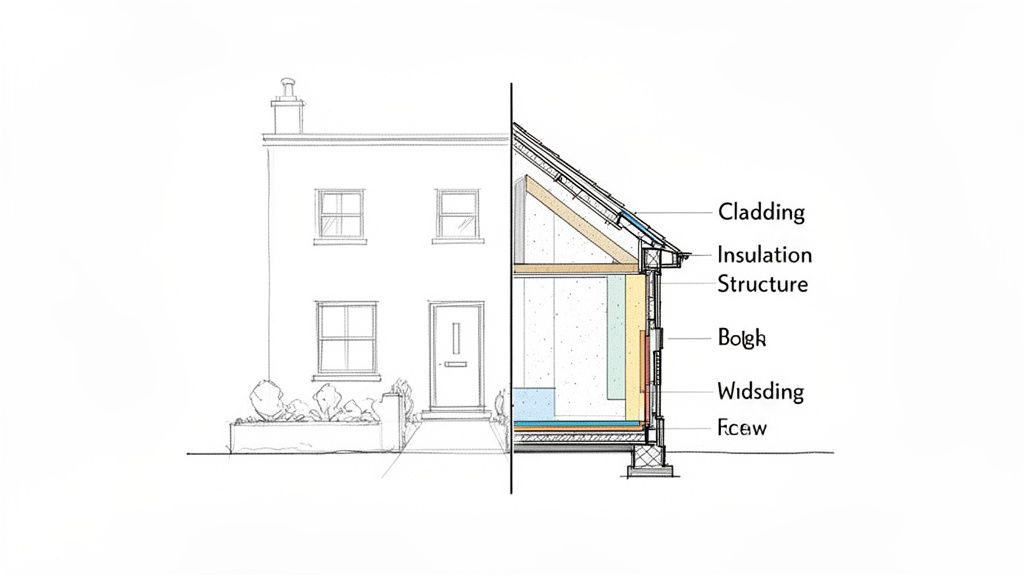
I like to think of a home's facade as the cover of a book. It’s the first thing you see, and it sets the entire tone for what you expect to find inside. A great book cover doesn’t just protect the pages; it hints at the genre, the quality, and the story within. In the same way, a house facade has two critical, intertwined jobs to do.
The Two Core Functions of a Façade
First and foremost, it’s about aesthetics. This is where curb appeal comes from, a factor that can boost a home's sale value by as much as 7%. The facade is the canvas where architectural style—from the sleek lines of a modern build to the welcoming porch of a classic Craftsman—truly comes to life.
But it's not just a pretty face. The facade also plays a vital performance role. It’s your home’s primary shield, providing structural integrity, insulation, and protection from the weather. Every single component, from the siding to the window seals, contributes to keeping the interior safe, comfortable, and energy-efficient. A properly designed facade acts as a tight building envelope, which can dramatically cut down on heating and cooling costs.
To really get a handle on how these functions work together, a couple of industry terms are helpful.
Fenestration: This sounds like a complex term, but it simply refers to the arrangement of all the openings in a building—windows, doors, and even skylights. Good fenestration is a delicate balance, bringing in natural light and fresh air while maintaining the home’s visual harmony and proportions.
Another key term is cladding. This is the outer skin of the building, the material you actually see and touch. Whether it's brick, wood, vinyl, or stone, the cladding defines the home's texture and color while serving as the first line of defense against sun, wind, and rain.
These elements are the fundamental building blocks that designers and architects use to shape a home's identity. With modern tools, visualizing how these components will look and perform together is easier than ever, something we explore in our guide for architects.
Ultimately, a well-executed facade is a beautiful marriage of art and engineering. It’s an exterior that’s as durable and functional as it is inviting—creating that feeling of pride every time you pull into the driveway.
Exploring Popular Architectural Facade Styles
The facade is where a house starts telling its story. Think of it like a book cover—it sets the tone for everything inside. Different architectural styles communicate completely different personalities, from the clean, confident lines of a Modern home to the cozy, rustic charm of a classic Farmhouse. Getting a feel for these styles is the first step in creating an exterior that looks and feels right.
Every style has its own design language, a unique combination of shapes, materials, and details. When these elements work together, they create a cohesive and powerful impression. Let’s walk through some of the most popular facade styles and break down what makes each one so recognizable.
Modern and Contemporary Facades
People often use "Modern" and "Contemporary" as if they mean the same thing, but they're actually distinct. Modern architecture isn't just a generic term for "new"; it refers to a specific design movement from the early to mid-20th century that threw out all the old, ornate rules. Its facades are all about:
- Clean, Straight Lines: Sharp angles and pure geometric forms are king, with a strong emphasis on horizontal and vertical planes.
- Minimalist Aesthetic: Forget fussy decoration. The beauty here comes from the pure form and the honest expression of materials.
- Large Expanses of Glass: Huge, uninterrupted windows and even entire glass walls are used to dissolve the boundary between inside and out.
- Flat or Low-Pitched Roofs: These roofs cap the structure with a clean, geometric silhouette.
Contemporary design, however, is literally what’s being designed today. It definitely pulls from Modernism's love of clean lines, but it's often warmer and more eclectic. A contemporary facade might take those sharp, modern angles and soften them with natural wood siding, or mix in locally sourced stone to ground the building in its environment.
Traditional and Craftsman Charm
If you’re drawn to a more timeless, established feel, Traditional and Craftsman styles offer a deep sense of history and comfort. Traditional facades often lean on symmetry and classical proportions, taking cues from historic European architecture. You'll typically see brick or stone, multi-pane windows (sometimes with shutters), and prominent columns flanking a central front door.
The Craftsman style, born from the Arts and Crafts movement, is all about celebrating handcrafted quality and natural materials. A Craftsman home feels sturdy, honest, and welcoming from the moment you see it.
A true Craftsman facade isn't hiding anything—it celebrates the way the house is built. You’ll see exposed roof rafters, decorative brackets under the eaves, and a wide front porch held up by thick, tapered columns.
This style has a wonderfully grounded quality that feels connected to the earth. Materials like wood shingles, river rock, and stucco are common, all enhancing that handcrafted, natural appeal. It’s a design that feels both incredibly solid and beautifully detailed.
Scandinavian and Mediterranean Influences
Nothing shapes architecture quite like climate and geography, and you can see this perfectly in Scandinavian and Mediterranean designs.
Scandinavian facades are a beautiful, pragmatic response to long, dark winters. The entire design philosophy is built around simplicity, function, and capturing every last bit of sunlight.
- Minimalist Color Palettes: Think crisp whites, cool grays, and deep blacks, often warmed up with accents of natural wood.
- Natural Materials: Light-colored wood cladding is a signature, visually connecting the home to the forests of the region.
- Large, Simple Windows: Unadorned windows are essential for pulling in as much daylight as possible.
- Steeply Pitched Roofs: This isn't just for looks; it's a practical solution for shedding heavy snow.
On the other side of the continent, Mediterranean facades are designed for life in the sun. Drawing inspiration from the villas of Spain, Italy, and Greece, these homes are built to stay cool and breezy. You’ll almost always see low-pitched roofs covered in heat-reflecting terracotta tiles. The walls are typically stucco, finished in light, earthy colors like white, cream, or ochre. Softly arched windows and doorways add a romantic touch, while wrought-iron balconies and gates provide a bit of elegant detail. It's a style that effortlessly blurs the line between indoor and outdoor living, perfectly suited for a sun-drenched climate.
Choosing the Best Materials for Your Facade
Picking the right materials for your home's facade is a lot like choosing the perfect coat—it has to look good, protect you from the elements, and last for more than one season. This decision is one of the most critical you'll make, as it directly shapes your home's character, dictates its long-term maintenance needs, and even impacts your energy bills.
This isn't just about curb appeal anymore. The global facade market is booming, expected to jump from USD 259.5 billion in 2025 to a staggering USD 426.7 billion by 2035. Why the massive growth? It's all about performance. Modern facades are now sophisticated systems designed to insulate homes effectively, sometimes cutting energy bills by 30-40%. You can dive deeper into these market trends and the future of facade technology to see where the industry is headed.
The chart below gives a snapshot of a few popular styles, showing how a specific palette of materials is key to achieving their iconic looks.
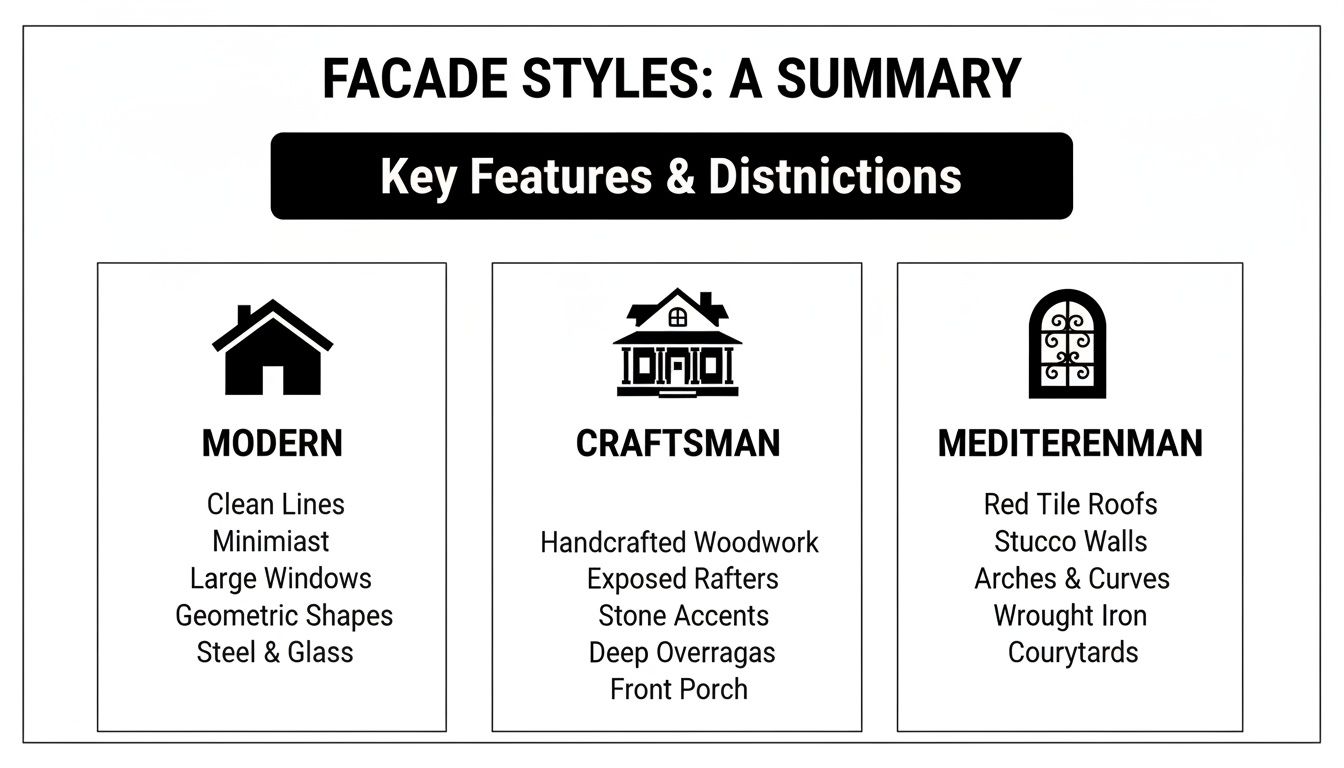
As you can see, a Modern home might lean on metal and glass, while a Craftsman feels right with stone and wood, and a Mediterranean home just wouldn't be the same without stucco.
Key Factors for Selecting Facade Materials
It's easy to fall in love with a look, but before you commit, it’s crucial to think like an engineer. The perfect material for a home in sunny, dry Arizona could be a maintenance nightmare in rainy Seattle.
Here’s what you need to weigh:
- Durability and Lifespan: How long will this material hold up? Brick and stone can easily last over a century, while other options might need a refresh in a few decades.
- Maintenance Requirements: Be honest about how much work you’re willing to put in. Natural wood needs regular sealing to stay beautiful, while vinyl siding just needs a good wash now and then.
- Installation Cost: The sticker price of the material is just one piece of the puzzle. Intricate stonework, for instance, requires specialized (and expensive) labor, unlike straightforward vinyl paneling.
- Insulation Properties (R-Value): A material's ability to resist heat flow—its R-value—can have a real impact on your heating and cooling costs year after year.
Remember, these factors are all connected. A pricier material like fiber cement might save you a small fortune in upkeep and energy savings down the road, making it a smarter long-term investment.
A Practical Look at Common Materials
Every material has its own personality—its own set of strengths and weaknesses. Let’s walk through some of the most common choices you’ll encounter.
Facade Material Comparison Guide
Choosing the right material means balancing aesthetics, budget, and long-term performance. This table breaks down the most common options to help you see how they stack up against one another.
| Material | Average Cost (per sq ft) | Durability/Lifespan | Maintenance Level | Best For |
|---|---|---|---|---|
| Brick/Stone Veneer | $15 - $30 | 100+ years | Very Low | Timeless, traditional looks and maximum durability. |
| Wood Siding | $5 - $12 | 20-40 years (with care) | High | Natural warmth and versatile styles, from rustic to modern. |
| Vinyl Siding | $4 - $8 | 20-40 years | Very Low | Budget-conscious projects where low maintenance is key. |
| Fiber Cement | $6 - $15 | 50+ years | Low | Mimicking wood or stone without the high upkeep. |
| Stucco/EIFS | $8 - $16 | 50-80 years | Low to Medium | Seamless, textured finishes for Spanish or modern designs. |
Ultimately, this comparison highlights that there's no single "best" material—only the best material for your specific project's goals, climate, and budget.
Brick and Stone Veneer These materials are the gold standard for permanence. They’re classic, beautiful, fire-resistant, and pest-proof. Aside from a cleaning every so often, they ask for very little. The trade-off? They are heavy and expensive, requiring skilled masons for installation.
Wood Siding Nothing beats the natural warmth of wood. Whether you’re using rustic cedar shingles or sleek horizontal planks, wood offers incredible versatility. The catch is the upkeep; it needs to be painted or sealed every few years to fend off moisture, bugs, and rot.
Vinyl Siding If budget and low maintenance are your top priorities, vinyl is hard to beat. It’s affordable, available in a rainbow of colors, and you’ll never have to pick up a paintbrush. While today’s vinyl is tougher than ever, it can still get brittle and crack in extreme weather.
Fiber Cement Siding This chameleon-like composite can convincingly imitate wood, stucco, or stone but without the associated headaches. It’s incredibly tough—resisting fire, rot, and insects with ease.
Fiber cement strikes an excellent balance between cost, durability, and aesthetics. It provides a premium look with a lifespan that can exceed 50 years, making it a fantastic long-term investment for many homeowners.
Stucco and EIFS A staple for Mediterranean and Spanish-style architecture, stucco provides a clean, textured finish. The modern version, Exterior Insulation and Finish Systems (EIFS), integrates a layer of foam insulation to boost energy efficiency. For both, a skilled installer is non-negotiable to avoid future moisture problems.
In the end, the right material for your home’s facade is a personal choice that balances your vision, budget, and local climate. By weighing these options carefully, you can create a beautiful exterior that will perform well for decades.
6. The Core Principles of Unforgettable Facade Design
So, what’s the secret sauce that transforms a basic house front into a breathtaking facade? It's not about luck or magic. Instead, it comes down to a handful of timeless design principles that architects live by to create exteriors that just feel right.
Think of it like a master chef crafting a signature dish. They don’t just throw random ingredients into a pot. They balance flavors, textures, and aromas with intention. In the same way, a beautiful facade is a thoughtful composition where every element—from the roofline to the window trim—works together in perfect harmony.
Finding Balance and Getting Proportions Right
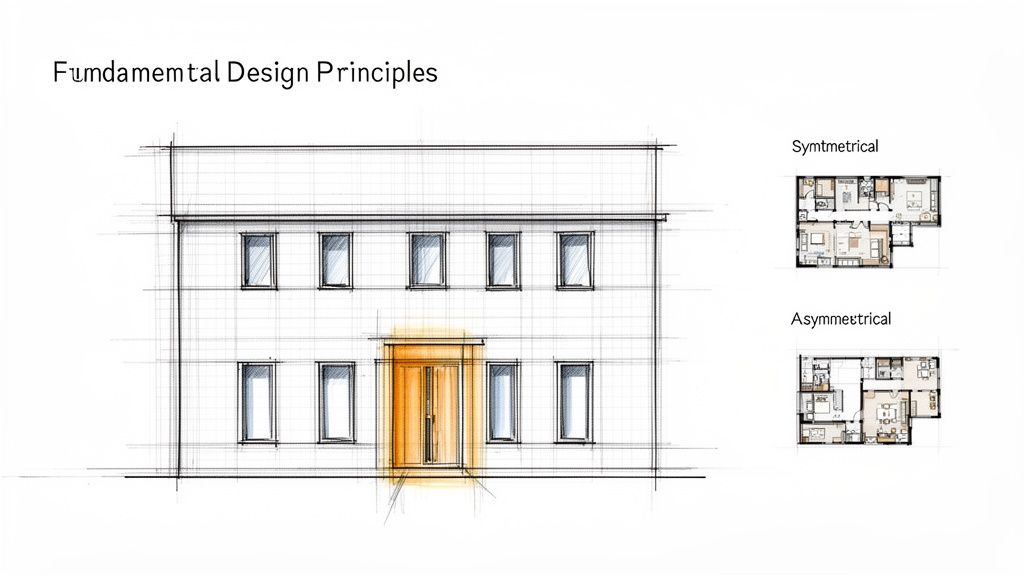
First up is balance, which is all about achieving a sense of visual equilibrium. A balanced facade feels stable and pleasing, not like it's about to tip over. Architects generally play with two types of balance:
- Symmetrical Balance: This is the classic, formal approach. Picture a traditional Georgian home where the front door sits dead center, with an identical set of windows mirroring each other on both sides. It communicates order, stability, and a deep sense of tradition.
- Asymmetrical Balance: This approach is more modern and dynamic. Instead of perfect mirroring, it creates equilibrium through visual weight. A large picture window on one side, for example, might be balanced by a smaller window paired with a prominent chimney on the other. It feels more organic and relaxed, but it takes a skilled hand to get it just right.
Working hand-in-glove with balance is proportion. This is all about the size relationships between different parts of the facade. Are the windows an appropriate size for the wall? Does the porch feel scaled to the rest of the house? A massive, oversized door on a tiny cottage would look comical because it’s out of proportion, instantly disrupting the home’s visual harmony.
Creating a Visual Rhythm
Just like a great song has a beat, a well-designed facade has rhythm. It’s a design principle that creates a sense of movement, guiding your eye across the building in a natural, predictable way.
This is often done through the simple power of repetition. Think about the steady march of columns on a wraparound porch or the consistent spacing of windows along a second story. This visual pattern creates a sense of order that our brains find incredibly satisfying.
Every great composition needs a focal point—a clear star of the show. On a house facade, this is typically the entryway.
Without a strong focal point, the eye wanders aimlessly, and the design can feel bland or confusing. By making the front door a feature—using a bold color, flanking it with lights, or framing it with a portico—you create a natural destination. It immediately tells a story, welcoming you in and anchoring the entire design.
Tying It All Together with Color and Material
Color and materials are the finishing touches that unify the entire composition. A simple, well-chosen color palette is a game-changer. You don't need a rainbow of colors; often, a primary body color, a secondary trim color, and a single accent color for the front door create a look that's both cohesive and sophisticated.
Materiality—the actual texture and character of the surfaces—brings the facade to life. The rugged feel of stacked stone, the sleekness of modern stucco, or the warmth of natural wood all inject personality. While mixing materials can create stunning visual interest, the key is ensuring they complement one another and fit the home's overall style.
Today, sustainability is a massive driver of material choices. Architects are increasingly focused on net-zero performance, using low-carbon and recyclable materials to turn the building envelope into an active player in energy management. We're seeing more facades with weather-adaptive elements like kinetic shading and integrated solar panels, which can slash a building's energy consumption by 25-35%.
Seeing how these complex material layers and colors will interact is nearly impossible to do in your head. This is where modern tech steps in, and finding the best architectural rendering software can make all the difference in bringing a design vision to life.
How AI Can Help You Visualize Your Facade
Not long ago, turning a façade concept into a convincing visual was a slow, often frustrating process. Designers would get bogged down in complex software, tweaking settings for hours, only to wait even longer for a single image to render. This technical bottleneck always put a cap on creativity and made showing clients different options a costly, time-consuming affair.
Thankfully, that whole workflow is being turned on its head. Modern AI tools are collapsing the design and visualization timeline from days into a matter of seconds. This isn't just about moving faster; it's about giving designers more creative freedom and making conversations with clients dramatically more productive.
From Sketch to Photorealistic in Seconds
The new way of working is incredibly direct. You can start with just about anything—a basic 3D model, a rough hand sketch, or even a photo of the existing house. Instead of wrestling with material editors and lighting rigs, you simply tell the AI what you want to see using plain language.
You could upload your model and type something like, "modern cedar cladding, black metal window frames, warm afternoon sun." In about 30 seconds, the AI delivers a photorealistic image that looks like it came straight from a photographer.
This is exactly how a platform like MoldaSpace works. It uses AI to generate high-quality exterior shots almost instantly. The whole interface is designed for speed. You can upload a base image and cycle through different styles with simple commands, completely skipping the old, clunky rendering process.
The Power of Rapid Iteration
This immediate feedback is a massive advantage when designing a house façade. It encourages you to explore more creative ideas without worrying about wasted time. You're no longer married to your first few concepts simply because rendering them took all day. Now, you can generate dozens of variations in the time it takes to drink a cup of coffee.
This fundamentally changes the conversation with your client. Instead of just describing what a façade could look like, you can show them several finished options, side-by-side. The feedback is clearer, and decisions are made faster and with more confidence.
Let's say a client is hesitating between a classic brick look and a sleek, contemporary stucco finish. In the past, creating professional renders for both was a real commitment. Today, you can generate both versions—and maybe a few wild cards—right there in a meeting with them.
This kind of agility is particularly powerful for smaller studios and solo designers. You can learn more about how AI rendering empowers designers to deliver the same high-quality visuals as large firms with dedicated render teams.
Practical Applications of AI Visualization
The benefits ripple through the entire project, from the first brainstorm to the final presentation.
- Faster Client Feedback: Get buy-in early by showing clients tangible options, heading off expensive changes down the road.
- Explore More Ideas: Test out that bold material choice or unusual color palette you might have skipped before because it was too time-consuming to model.
- Win More Projects: Your proposals will stand out when you can include professional-grade visuals that let potential clients see your vision clearly.
- Create Marketing Assets: Effortlessly build a portfolio of stunning façade images to fill your website and social media feeds, showing off what your firm can do.
Ultimately, by tearing down the technical barriers of traditional rendering, AI lets designers get back to focusing on what they do best: designing. It opens the door to more creative exploration, smoother collaboration, and better outcomes for every project.
Common Questions About House Facade Design
When you start digging into a facade project, the practical questions quickly bubble to the surface. How much will this actually cost? What materials won't have me doing repairs in five years? Do I really need to call the city for this? Let's clear the air and tackle some of the most common questions homeowners and designers run into.
How Much Does It Cost to Redo a House Facade?
This is the big one, and the honest answer is: it varies wildly. Thinking about facade costs is a lot like shopping for a car—the price for a basic refresh is a world away from a full luxury overhaul. The final bill really comes down to the materials you pick, the size of your house, and how complex the work is.
Let’s put some real numbers to it, based on a typical 1,500-square-foot home:
- A Quick Refresh: If you're just looking for a high-impact update, a professional paint job on the siding and trim can work wonders. This usually lands in the $3,000 to $7,000 range and can completely change your home's character.
- Siding Replacement: Tearing off old siding and starting fresh is a bigger job. For new vinyl siding, you're likely looking at a cost between $7,000 and $15,000.
- A Premium Overhaul: This is where you get into high-end materials like natural stone, brick veneer, or fiber cement. A full-scale replacement with these premium options can easily cost $25,000 to $50,000 or even more, especially if you uncover structural issues that need fixing.
Keep in mind that labor is a huge part of the equation, often making up 40-60% of the total cost. It's always a good idea to get at least three detailed quotes from trusted local contractors to make sure you’re getting a fair price.
Don't forget to budget for potential surprises, like repairing rotted sheathing or updating windows and doors at the same time. Planning for these "what-ifs" from the start will save you a lot of stress down the road.
What Is the Most Durable Facade Material?
If "set it and forget it" is your mantra, a few materials stand head and shoulders above the rest for sheer longevity.
Brick and natural stone are the undisputed heavyweights. There's a reason you see centuries-old buildings made from them—they're incredibly tough and resistant to just about everything: fire, rot, pests, and nasty weather. A well-built brick or stone facade can easily last 100 years with little more than a wash now and then.
Coming in as a strong modern contender is fiber cement siding. This stuff is an engineering marvel, designed to fight off moisture, insects, fire, and impact. It often lasts over 50 years and gives you the look of wood or stucco without all the high-maintenance baggage.
While these materials cost more upfront, they often pay for themselves over the long haul by saving you a fortune in repairs and replacements.
How Can I Improve My Facade on a Budget?
Great curb appeal doesn't have to break the bank. With a little creativity, you can make a huge difference without a massive budget. The trick is to focus on changes that deliver the most visual punch for the least amount of cash.
Here are a few wallet-friendly ideas that always work:
- Paint the Front Door: It’s a classic for a reason. A vibrant, welcoming color on your front door creates an instant focal point. For the cost of a can of paint, you get a ton of personality.
- Swap Out the "Jewelry": Think of house numbers, light fixtures, and the mailbox as your home's accessories. Replacing old, dated hardware with something fresh and modern makes the whole entrance feel more intentional.
- Go Green: Never underestimate the power of plants. Window boxes, a pair of nice planters flanking the door, or just cleaning up your garden beds can breathe life into a tired-looking exterior.
- Add or Paint Shutters: If they fit your home's style, shutters add a wonderful layer of depth and character. A fresh coat of paint on existing ones or adding a new set can be a game-changer.
And don't forget the simplest fix of all: a good power washing. You’d be amazed what a deep clean can do to reveal the true beauty of your home’s exterior.
Do I Need a Permit to Change My House Facade?
This is a crucial question, and the short answer is, "it depends." Building codes are handled at the city or county level, so the rules can vary from one town to the next.
Generally, you won't need a permit for simple cosmetic updates, such as:
- Painting: Go ahead and paint your house—just be sure to check any HOA rules first!
- Minor Repairs: Fixing a bit of loose siding or replacing a single cracked pane of glass is usually considered basic maintenance.
However, once you start talking about structural changes, permits almost always come into play.
A good rule of thumb: if the project alters the building's structure, you probably need a permit. This includes things like making window openings larger, adding a porch, or completely replacing the cladding material. This process ensures the work is safe and up to current building and energy codes.
Before you buy a single material, your first call should be to your local building department. They’ll tell you exactly what’s required, what the process is, and which inspections you’ll need to schedule for your facade of house. Taking this step first can save you from massive fines and the nightmare of having to tear out and redo your work.
Ready to stop guessing and start seeing? With MoldaSpace, you can upload a photo of your project and get a photorealistic render in seconds. Play with different materials, test color palettes, and find the perfect look before committing. Try MoldaSpace for free and start visualizing your perfect house facade today.