¿Cuál es mi estilo de diseño de casa? Una guía para encontrar tu look perfecto

El estilo de diseño de tu hogar es su personalidad única—es la forma en que los colores, muebles y texturas se unen para contar una historia sobre ti. Piénsalo como un lenguaje visual. Una vez que aprendas a hablarlo, podrás crear un espacio que se sienta intencional y, lo más importante, que se sienta como hogar.
Esta guía te ayudará a descifrar ese lenguaje, superando las etiquetas confusas para que puedas descubrir qué realmente resuena con tu gusto personal.
Descubriendo el Lenguaje Visual de Tu Hogar
¿Alguna vez has entrado en una habitación y te has sentido instantáneamente cómodo, pero no podías identificar exactamente por qué? ¿O tal vez has intentado explicar lo que te gusta, solo para terminar con una colección aleatoria de imágenes de revistas y tableros de Pinterest? Responder la pregunta "¿cuál es el estilo de diseño de mi casa?" no se trata de memorizar las reglas de los libros de texto para "Mid-Century Modern" o "Industrial". Se trata realmente de descubrir los hilos comunes que unen tus preferencias.
Piensa en el estilo de tu hogar como una conversación continua entre tú y tu espacio. Cada pieza de mueble que eliges, cada color que te atrae y cada material que te encanta tocar son parte de este diálogo. Es una expresión profundamente personal, no una categoría estricta en la que tengas que encajarte.
Encontrando Tu Estilo Auténtico
El objetivo real aquí es crear un hogar que sea una extensión genuina de ti mismo. Probablemente descubrirás que no encajas perfectamente en una sola caja—¡y eso es algo bueno! La mayoría de las personas son una mezcla de dos o tres estilos. Podrías amar las líneas limpias y sin desorden del Minimalismo pero también anhelar las texturas naturales y acogedoras que se encuentran en el diseño Escandinavo. Esa combinación crea un híbrido único que es completamente tuyo.
Tu hogar debe contar la historia de quién eres, y ser una colección de lo que amas. – Nate Berkus
Todo este proceso realmente comienza contigo. Tus gustos y sentimientos son la base para el estilo único de tu hogar, como muestra este diagrama de flujo.
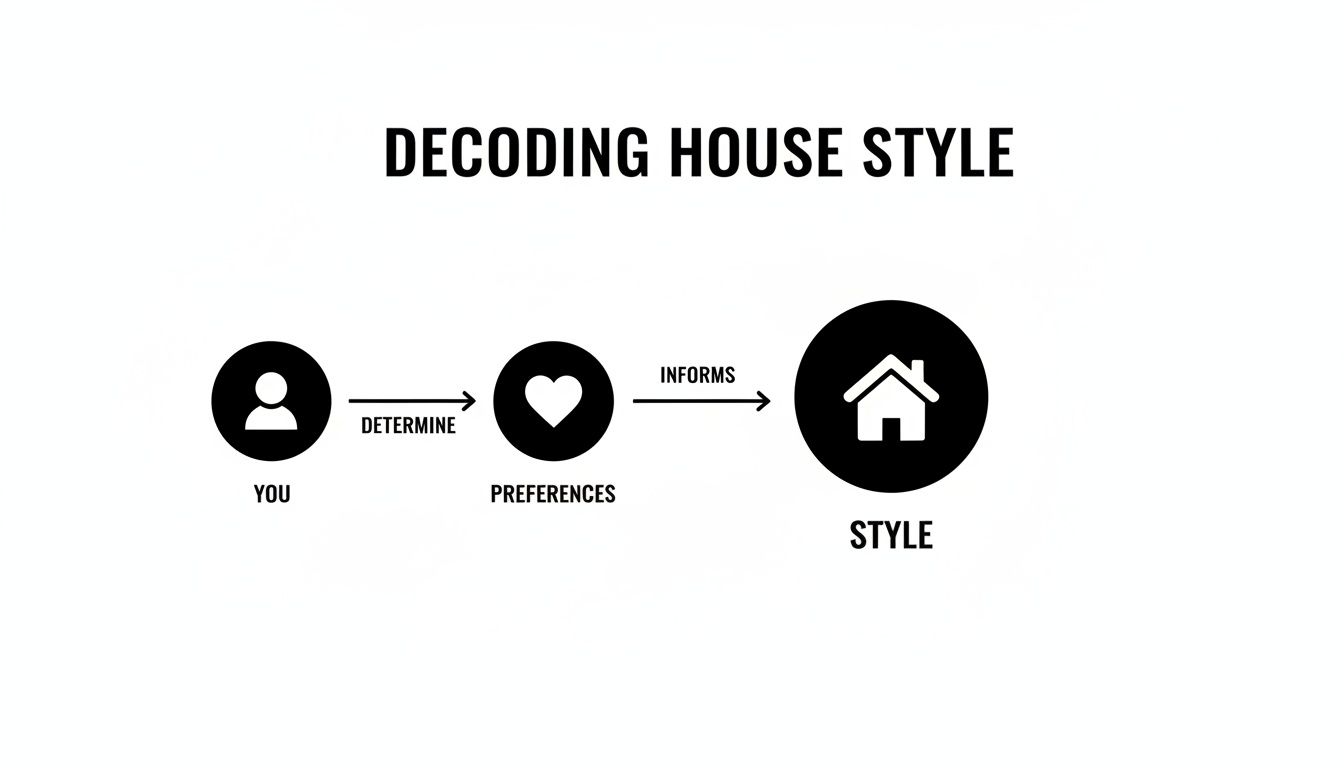
En última instancia, tú eres el elemento más importante en toda la ecuación.
Una Mirada Rápida a los Estilos de Diseño Interior Populares
Para ayudarte a comenzar a identificar esos hilos comunes en tu propio gusto, he reunido una descripción general simple de 6 de los estilos de diseño más populares y distintos que existen.
Piensa en esta tabla como una guía de referencia rápida. Es un punto de partida para ver qué filosofías y características se alinean con tu visión, ayudándote a construir un vocabulario para describir el hogar que deseas crear.
| Estilo de Diseño | Filosofía Central | Colores Típicos | Materiales Clave | Características del Mueble |
|---|---|---|---|---|
| Escandinavo | Simplicidad, minimalismo y funcionalidad | Blanco, gris, negro, azules pálidos, tonos naturales | Maderas claras (haya, fresno, pino), lana, lino, fieltro | Líneas limpias, acabados naturales, formas sin desorden |
| Mid-Century Modern | Función sobre forma, formas orgánicas y diseño democrático | Tonos tierra, amarillo mostaza, verde oliva, naranja | Teca, nogal, plástico, metal, vidrio | Patas cónicas, patrones gráficos, siluetas minimalistas |
| Industrial | Celebrando elementos arquitectónicos crudos y expuestos | Paleta neutral de gris, negro y blanco con tonos de ladrillo | Ladrillo expuesto, hormigón, acero, madera desgastada | Madera envejecida, marcos de metal, utilitario, minimalista |
| Japandi | Un híbrido del minimalismo japonés y la función escandinava | Tonos apagados, maderas claras, negro o gris oscuro de contraste | Madera natural (roble, cedro), bambú, papel, piedra | Perfil bajo, funcional, artesanía de alta calidad |
| Minimalista | "Menos es más", enfocándose en elementos esenciales | Monocromático, a menudo tonos de blanco, beige o gris | Materiales simples y de alta calidad como metal, vidrio, madera | Sin adornos, geometría simple, altamente funcional |
| Bohemio | Espíritu libre, ecléctico y expresión personal | Tonos de joyas ricos, colores tierra, patrones vibrantes | Ratán, macramé, textiles naturales, madera | Vintage, texturas en capas, piezas inspiradas globalmente |
Úsalo como referencia mientras profundizamos en cada estilo. No te preocupes por elegir solo uno—por ahora, solo nota a cuáles columnas sigues volviendo.
Explorando los 10 Principales Estilos de Diseño Interior
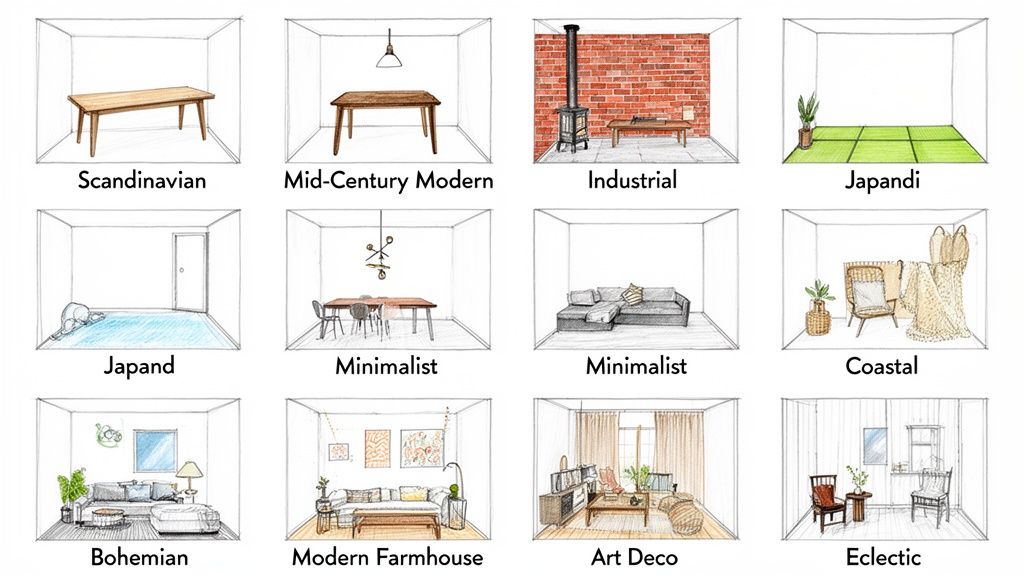
Bien, ya tienes la jerga. Ahora viene la parte divertida: profundizar en las historias detrás de los estilos de diseño más populares. Piensa en cada uno como más que solo una apariencia—es una filosofía, una reacción a un momento en la historia y una forma de vida. Entender de dónde vienen estos estilos es la clave para descubrir cuál se siente como tú.
No se trata solo de memorizar definiciones. Se trata de conectar con el sentimiento de un espacio. Mientras exploras cada estilo, presta atención a lo que resuena. ¿Te hace sentir energizado? ¿Tranquilo? Esa reacción visceral es tu mejor guía para responder, "¿cuál es el estilo de diseño de mi casa?"
Escandinavo: El Arte del Hygge
Nacido de los famosos inviernos largos y oscuros de los países nórdicos, el diseño escandinavo se trata de crear luz, función y calidez. Su corazón y alma es hygge (pronunciado "hoo-ga"), una palabra danesa que captura perfectamente una sensación de comodidad profunda y satisfacción. No se trata solo de estética; se trata de diseñar un espacio que se sienta como un abrazo.
El estilo comienza con un lienzo de blancos brillantes y grises frescos para aprovechar al máximo cualquier luz disponible. Luego, añade materiales naturales para traer textura y vida.
- Materiales Clave: Las maderas claras son la columna vertebral aquí. Piensa en haya, fresno y pino para todo, desde pisos hasta muebles.
- Textiles: Obtener esa sensación de hygge es imposible sin texturas acogedoras. Hablamos de mantas de lana suave, alfombras de piel de oveja y cortinas de lino ligero.
- Muebles: Conocidos por sus líneas limpias, formas simples y artesanía increíble, los muebles escandinavos están diseñados para ser tan útiles como hermosos.
Mid-Century Modern: Formas Orgánicas y Función
Entra en la era posterior a la Segunda Guerra Mundial de optimismo, desde mediados de los años 40 hasta finales de los 60, y encontrarás Mid-Century Modern (MCM). Fue una época de innovación increíble, y el diseño refleja ese espíritu de pensamiento hacia el futuro. Los diseñadores querían traer el modernismo a las masas, creando piezas que fueran elegantes, accesibles y construidas para la vida real.
El look se define por sus líneas limpias, curvas orgánicas suaves y un verdadero amor por los materiales naturales. Es este hermoso baile entre lo hecho por el hombre y lo natural lo que le da a MCM su atractivo atemporal.
Una creencia central en el diseño Mid-Century Modern es dejar que los materiales hablen por sí solos. La veta de la madera es celebrada, el plástico se moldea en formas emocionantes nuevas, y el metal proporciona un soporte elegante y elegante. Cada elemento es honesto sobre lo que es.
Busca muebles con las icónicas patas cónicas, piezas que mezclen madera con vinilo o plástico, y una paleta de colores que combine tonos tierra como verde oliva y naranja quemado con patrones gráficos divertidos.
Industrial: Crudo y Refinado
El diseño industrial encuentra su belleza en las cosas que otros estilos intentan ocultar. Toma sus señales de antiguas fábricas y almacenes, celebrando el esqueleto crudo de un edificio—el ladrillo expuesto, los conductos visibles y los pisos de hormigón pulido son las estrellas del espectáculo.
El verdadero truco es hacer que estos elementos crudos y utilitarios se sientan sofisticados. Se trata de equilibrar las superficies duras y frías del metal y el hormigón con la calidez de la madera envejecida, alfombras suaves y muebles cómodos.
- Paleta de Colores: Principalmente neutrales como gris, negro y blanco, con calidez inyectada a través de tonos rojo ladrillo y madera rústica.
- Iluminación: A menudo un punto focal importante. Piensa en luces colgantes de metal de gran tamaño o iluminación de pista que parece que vino directamente de un taller.
- Decoración: Mantenida al mínimo para que la arquitectura pueda brillar. Los objetos salvados, los carteles vintage y el arte abstracto a gran escala son acentos perfectos.
Japandi: Simplicidad Serena
¿Qué obtienes cuando combinas el minimalismo rústico del diseño japonés con la funcionalidad acogedora del estilo escandinavo? Obtienes Japandi, un híbrido impresionante que es pacífico, reflexivo y profundamente conectado con la naturaleza. Es el matrimonio perfecto entre el wabi-sabi japonés (el arte de encontrar belleza en la imperfección) y el hygge escandinavo.
La paleta de colores Japandi se inclina hacia tonos más cálidos que el Scandi puro, trayendo tonos tierra ricos como beige, crema y topo. Estos a menudo se puntúan con un acento negro o gris carbón para contraste. El objetivo es crear un ambiente que se sienta equilibrado, tranquilo y absolutamente tranquilizador.
Minimalista: La Esencia de Menos es Más
El minimalismo no se trata de vivir en una caja fría y vacía. Se trata de eliminar el exceso para revelar lo esencial, creando un espacio que sea intencional, funcional e increíblemente tranquilizador. Cuando eliminas el ruido visual, lo que queda puede brillar verdaderamente.
La filosofía es simple: calidad sobre cantidad. Cada objeto en un hogar minimalista sirve un propósito y tiene un lugar designado.
- Paleta de Colores: Estrictamente controlada y monocromática. Verás varios tonos de blanco, beige o gris claro utilizados para crear un look limpio y sin costuras.
- Muebles: Las formas son simples y geométricas, sin adornos ni ornamentación adicional. La función dicta la forma, siempre.
- Organización: El almacenamiento inteligente y oculto es el arma secreta del minimalismo, manteniendo las superficies despejadas y preservando esa atmósfera serena.
Bohemio: Espíritu Libre y Ecléctico
Bohemio, o "Boho", es el estilo para el viajero, el artista, el soñador. Es un estilo maravillosamente ecléctico y personal que tira el libro de reglas por la ventana. Se trata de superponer texturas, patrones y objetos significativos para crear un espacio que cuente tu historia.
Las habitaciones Boho son cálidas, vividas y a menudo llenas de una mezcla de hallazgos vintage, textiles globales y toneladas de plantas. Es un look relajado que se trata de comodidad y personalidad. Este amor por artículos únicos y hechos a mano es un movimiento creciente; de hecho, el 65% de los diseñadores a nivel mundial planeaban obtener de artesanos en 2023. Muestra un cambio poderoso hacia piezas únicas que traen alma a un hogar, que puedes leer más en recientes reportes de tendencias de diseño.
Tradicional: Atemporal y Ordenado
Enraizado en las sensibilidades europeas de los siglos XVIII y XIX, el diseño Tradicional se trata de elegancia clásica, orden y simetría. Imagina habitaciones con molduras de corona detalladas, muebles ornamentados y telas ricas como seda, terciopelo y damasco.
Este estilo crea una sensación de historia, comodidad y calma. Es familiar y ordenado de la manera más reconfortante.
- Muebles: Busca madera oscura y pulida con detalles elaborados como tallas, curvas elegantes y patas de garra.
- Esquema de Color: Una mezcla de tonos de joyas ricos y neutrales suaves crea una atmósfera que es tanto majestuosa como increíblemente acogedora.
Moderno: Elegante y Sin Adornos
Las personas a menudo usan "moderno" y "contemporáneo" indistintamente, pero en el mundo del diseño, Moderno se refiere a un período específico desde principios a mediados del siglo XX. Es el precursor del Mid-Century Modern y se define por sus líneas limpias y la total falta de complicaciones.
El diseño moderno se construye sobre líneas horizontales y verticales fuertes. Favorece materiales naturales como madera sin pintar, cuero y metal, dejándolos en su estado simple y sin adornos. El efecto general es nítido, intencional y refrescantemente sin desorden.
Costero: Fresco y Relajado
Inspirado por la vida en la playa, el diseño Costero se trata de crear un espacio ligero, aireado y relajante que se sienta como unas vacaciones permanentes. Olvida las colecciones de conchas de mar cursis; se trata de capturar el sentimiento de la costa.
El estilo se basa en una paleta de neutrales suaves—piensa en blancos nítidos, beiges arenosos y azules pálidos—para evocar un ambiente brillante y fresco. Los materiales naturales como ratán, yute y maderas de lavado claro son cruciales para añadir textura y calidez, como la madera flotante en la orilla.
Granja: Rústico y Acogedor
La Granja Moderna es la mezcla perfecta del encanto rústico campestre y las líneas limpias contemporáneas. Toma la calidez y comodidad de una granja tradicional y le da una actualización fresca con una paleta de colores neutral y toques modernos. Los distintivos incluyen paredes de tablillas, vigas de madera recuperada, muebles cómodos de gran tamaño y accesorios vintage. Es un estilo que se siente tanto atemporal como perfectamente vivido.
El Quiz de Descubrimiento de Estilo de 5 Minutos
Puedes leer sobre estilos de diseño todo el día, pero descubrir el tuyo es un juego completamente diferente. Se trata menos de tu cabeza y más de tu instinto. Para realmente acertar "¿cuál es el estilo de diseño de mi casa?", tienes que sintonizar lo que instintivamente amas.
Piensa en este quiz rápido como tu brújula de estilo personal. Va más allá de listas simples para llegar al corazón de lo que encuentras hermoso, cómodo e inspirador. No vamos a probarte sobre términos de diseño. En cambio, es más como una conversación guiada con tu propio gusto.
Cómo Funciona el Quiz
Te guiaré a través de una serie de opciones visuales y sensoriales. Cada pregunta está diseñada para descubrir tus inclinaciones naturales y construir una imagen más clara de tu perfil de estilo único. No lo pienses demasiado; solo sigue tu primer instinto.
Verás preguntas como:
- Atractivo Visual: ¿Cuál de estas salas de estar simplemente se siente correcta para ti?
- Textura y Tacto: Si pudieras meter la mano en la pantalla, ¿qué material te gustaría tocar—el mármol frío, la madera rugosa o el lino suave?
- Humor de Color: ¿Cuál de estas paletas de colores te hace sentir tranquilo y feliz?
Cada respuesta es una pista. ¿Atraído por texturas crudas y sin terminar? Eso podría apuntar hacia una vibra Industrial o Rústica. Si te encuentras eligiendo consistentemente líneas limpias y espacios abiertos, probablemente te inclinas más hacia Minimalista o Escandinavo.
Encontrar tu estilo no se trata de encajar en una caja rígida. Se trata de descubrir lo que amas para que puedas crear un espacio que se sienta genuinamente tú. Aquí es donde comienzas a contar tu propia historia a través de tu hogar.
Este quiz simplemente está aquí para ayudarte a descifrar esas preferencias.
Lo Que Tus Resultados Realmente Significan
Aquí está la mejor parte: no obtendrás una sola etiqueta restrictiva al final. La verdad es que muy pocas personas son 100% un estilo. La mayoría de nosotros somos una mezcla hermosa y única de varios, y este quiz está construido para reflejar esa realidad.
En lugar de una respuesta, obtendrás un desglose de tus influencias de estilo primarias y secundarias. Por ejemplo, podrías descubrir que eres 70% Japandi con una veta de 30% Mid-Century Modern. Este tipo de insight es oro. Te da un camino claro hacia adelante pero también la libertad de jugar y mezclar elementos de una manera que es completamente tuya.
Entender esta mezcla personal es el secreto para crear un hogar que se sienta tanto cohesivo como auténtico. Es la diferencia entre copiar un catálogo y crear un espacio que realmente refleja quién eres.
Así que, respira profundo, confía en tu instinto, y descubramos cuál es tu estilo.
[Inserción de Quiz Interactivo Aquí]
Cómo Visualizar y Confirmar Tu Estilo de Diseño
Obtener un resultado de quiz es un punto de partida fantástico. Piénsalo como un poste indicador que te señala la dirección correcta. Pero ahora viene la parte divertida: convertir ese nombre de estilo abstracto en un look que realmente puedas vivir y amar. Se trata de cerrar la brecha entre un concepto como "Mid-Century Modern" y lo que eso realmente se ve en tu espacio.
La mejor manera de comenzar es mirando alrededor de tu propio hogar. Olvida el quiz por un segundo y simplemente toma inventario de lo que ya posees y hacia lo que gravitas. No se trata de juzgar tu decoración actual; se trata de reunir pistas.
- Lista lo que amas: Anota las piezas que te hacen feliz. ¿Es ese sillón de cuero ridículamente cómodo? ¿Las líneas limpias y simples de tu mesa de café? ¿Tal vez es esa manta de punto grueso que siempre alcanzas?
- Encuentra el terreno común: Mira tu lista. ¿Hay un tema? Tal vez ves mucha madera natural, o una preferencia por formas suaves y curvas, o una cierta familia de colores.
- Conecta los puntos: Ahora, compara estas preferencias del mundo real con tus resultados del quiz. Esta simple verificación de instinto ayuda a anclar el perfil de estilo en lo que ya sabes que te gusta.
De la Inspiración a la Visualización
Bien, tienes una dirección de estilo. El siguiente obstáculo—y es uno grande para propietarios y diseñadores por igual—es imaginar cómo todo se unirá en tu habitación. ¿Cómo puedes estar seguro de que esa vibra Japandi que amas en Pinterest funcionará con el layout extraño de tu sala de estar y la iluminación no tan excelente?
Aquí es donde la tecnología puede ser una ayuda masiva. En lugar de solo fijar fotos de las casas de otras personas, ahora puedes obtener vistas previas realistas de cómo un estilo se verá en tus cuatro paredes.
Ver es creer, y en ningún lugar es eso más cierto que en el diseño interior. Las herramientas de visualización eliminan la adivinanza de la ecuación. Obtienes una prueba de manejo de una estética antes de gastar un centavo o un ápice de esfuerzo, que es la diferencia entre esperar que un estilo funcione y saber que lo hará.
Lo que solía requerir software complejo ahora es increíblemente fácil. Puedes usar IA para aplicar diferentes estilos de diseño directamente a fotos de tus habitaciones o incluso planos simples. Es un cambio de juego para construir confianza y tomar una decisión final. Puedes aprender más sobre cómo la IA está moldeando el diseño interior y ver cuán poderosos son estos nuevos enfoques.
Usando IA para Probar y Refinar Tu Estilo
Imagina ver tu sala de estar, pero de repente está decorada en un estilo Costero perfecto. Luego, con otro clic, es un espacio Tradicional sofisticado. Esto no es ciencia ficción; es lo que plataformas como MoldaSpace pueden hacer en minutos. Solo subes un plano o una foto de tu habitación y escribes un prompt de texto simple para ver la magia suceder.
Por ejemplo, podrías subir tu foto y escribir, "Muéstrame esta sala de estar en estilo Japandi con muebles de roble claro y textiles de lino". En aproximadamente 30 segundos, obtienes una imagen fotorrealista mostrándote exactamente eso.
Esta imagen muestra cómo un plano básico puede transformarse instantáneamente en un espacio completamente realizado y estilizado usando un prompt simple.
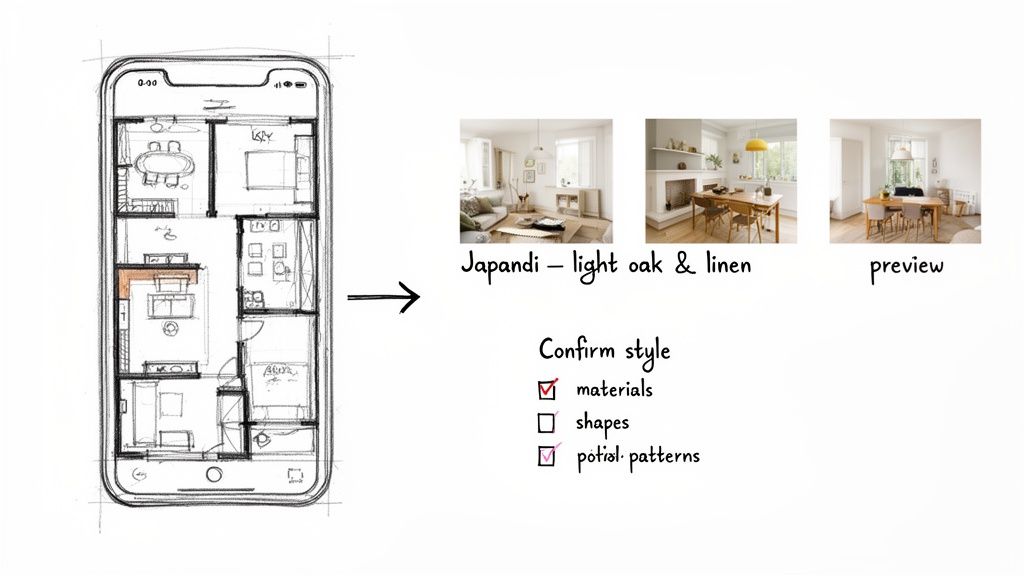
Esta retroalimentación visual inmediata es perfecta para jugar con diferentes looks y ajustar los detalles hasta que se sienta correcto.
Esta capacidad de experimentar es más importante que nunca. Una encuesta de 2023 de 1stDibs, por ejemplo, mostró un movimiento enorme alejándose de las cocinas y salas de estar completamente blancas que alguna vez dominaron. Solo el 14% de los diseñadores las favorecían, una caída pronunciada del 24% del año anterior. En cambio, los tonos más cálidos y los patrones orgánicos están aumentando en popularidad.
Aquí es donde la visualización realmente brilla. Podrías descubrir que tu hogar, que pensabas estaba destinado a ser "Moderno", realmente cobra vida con un toque más inspirado en la naturaleza como "Japandi" o "Biofílico". Al probar estas ideas sin riesgo, puedes aterrizar en un diseño que se sienta tanto verdadero para ti como perfectamente actual, dándote una respuesta sólida y visual a "¿cuál es el estilo de diseño de mi casa?"
¿Qué Está en Tendencia en Diseño Interior Ahora Mismo?
Conocer los estilos de diseño clásicos es tu base, pero seamos honestos—como la moda, los interiores tienen sus momentos. Mantener un dedo en el pulso de lo que es actual te ayuda a tomar decisiones que se sientan frescas, no anticuadas. Descubrir "¿cuál es el estilo de diseño de mi casa?" a menudo significa ver cómo esas estéticas atemporales se están remezclando para la forma en que vivimos ahora.
Estos cambios no suceden por capricho. Son un espejo de lo que todos estamos anhelando: más bienestar, sostenibilidad y carácter genuino en nuestros hogares. Colectivamente nos estamos alejando de la perfección estéril y de "sala de exposición" y nos estamos inclinando hacia espacios que se sienten tranquilizadores, conectados con la naturaleza y llenos de cosas que realmente significan algo para nosotros. Se trata menos de un look perfecto en una foto y más de crear un ambiente que apoye nuestras vidas reales.
Se Trata de Bienestar y Autenticidad
Dos estilos realmente capturan este humor moderno: Japandi y diseño Biofílico. Japandi—esa mezcla hermosa y serena del minimalismo japonés y la practicidad escandinava—sigue siendo fuerte porque se trata de artesanía y calma. Al mismo tiempo, el diseño Biofílico, que es solo una forma elegante de decir que estamos trayendo el exterior adentro, está en auge. Estamos llenando nuestros hogares con plantas, maximizando la luz natural y usando materiales orgánicos para calmar nuestras almas cansadas de pantallas.
Este anhelo de autenticidad también es por qué ves tanto decor artesanal y hecho a mano. Las personas están activamente buscando piezas únicas y de una sola vez que cuentan una historia, descartando las cosas producidas en masa. Así es como inyectas personalidad y alma en una habitación, ya sea que tu estilo base sea moderno, bohemio o cualquier cosa intermedia.
Un hogar debe sentirse como un santuario. Todo este movimiento hacia materiales orgánicos, formas curvas y colores inspirados en la naturaleza es una respuesta directa a nuestra necesidad de comodidad y paz en un mundo loco. Se trata de crear espacios que realmente nos nutran.
Este deseo profundo de calidez y comodidad incluso está poniendo un giro nuevo en los estilos más establecidos.
Cómo los Clásicos Están Recibiendo un Cambio de Imagen Moderno
Incluso los estilos más populares están evolucionando. Toma la granja moderna, por ejemplo. El look pesado en tablillas y rústico que estaba en todas partes se está suavizando. Ahora, lo ves con líneas más elegantes, menos madera desgastada y paletas de colores más sofisticadas y tierra. Se está convirtiendo menos en una interpretación literal de un granero y más en un sentimiento—acogedor y acogedor, pero con un borde más contemporáneo y limpio.
Puedes ver este cambio sucediendo en todas partes. Ya en 2023, los profesionales del diseño estaban llamando el fin de tendencias como la cocina completamente blanca, un distintivo de ese look de granja clásico. En su lugar, estamos viendo opciones más cálidas e interesantes como islas de cocina dobles, tonos tierra ricos y un enfoque masivo en materiales orgánicos. Si tienes curiosidad, puedes profundizar en este tipo de cambios en recientes reportes de tendencias de diseño del hogar.
Ingredientes Clave Moldeando los Hogares de Hoy
Mientras comienzas a definir tu estilo personal, mantén estas tendencias de gran escala en tu bolsillo trasero. Se trata menos de modas pasajeras y más de un cambio fundamental en cómo queremos que nuestros hogares se sientan.
Muebles Curvos: Sofás, sillas e incluso mesas de café con bordes suaves y redondeados están en todas partes ahora. Estas formas orgánicas son un antídoto bienvenido para todas las líneas duras en una habitación, creando un sentido de flujo y comodidad mucho más suave.
Materiales Orgánicos: Los materiales naturales y texturados son reyes. Piensa en ratán, travertino, maderas de tonos claros y lino. Estos elementos no solo se ven bien; añaden una calidez táctil que te hace querer extender la mano y tocarlos.
Paletas de Colores Tierra: La era de los interiores completamente blancos y gris frío se está desvaneciendo. Estamos abrazando colores más cálidos e invitantes que hacen que una habitación se sienta como un abrazo. Terracota rica, verde salvia suave, marrones profundos y beiges cálidos están creando espacios acogedores, envolventes y totalmente serenos.
Llevando Tu Estilo Identificado a la Vida
Así que, finalmente le has puesto un nombre al estilo de diseño de tu hogar. ¡Excelente! Aquí es donde la diversión realmente comienza. La pregunta de "¿cuál es el estilo de diseño de mi casa?" ya no es un misterio—es el primer paso en un plan sólido. Ya sea que estés ansioso por hacer algunos ajustes de alto impacto o te estés preparando para una renovación importante, esa claridad es tu mejor amigo.
Para la multitud de bricolaje, el viaje comienza con cambios pequeños e inteligentes que celebren tu estilo recién descubierto. No necesitas quebrar el banco para hacer que un espacio se sienta correcto. Algunos movimientos reflexivos pueden cambiar completamente la vibra de una habitación.
Pasos Pequeños, Gran Impacto
El objetivo es construir un look cohesivo, un cambio intencional a la vez. Piensa en estos como victorias fáciles para comenzar:
- Cambia Tus Textiles: Este es el truco más rápido del libro. Nuevos cojines, una manta acogedora o cortinas diferentes pueden inyectar instantáneamente los colores y patrones característicos de tu estilo en una habitación.
- Construye un Tablero de Humor: En serio, haz esto. Recopila muestras de tela, fichas de pintura y fotos de muebles que amas. Actúa como tu Estrella Polar visual, manteniendo cada compra en el camino y fiel a tu visión.
- Comienza con un Punto Focal Único: Encuentra una pieza que capture perfectamente tu estética—tal vez sea un sillón de declaración o una pieza de arte audaz. Esa pieza puede anclar todo el espacio y guiar todas tus otras decisiones.
El Arma Secreta de un Profesional
Para diseñadores de interiores y agentes de bienes raíces, aquí es donde realmente brillas. Conocer el estilo de tu cliente es la mitad de la batalla; la otra mitad es mostrarles lo que es posible. Corta a través del ruido y construye rapport instantáneo.
Conocer el estilo de un cliente es una cosa; mostrarle su propio hogar transformado por él es otra. Así es como aceleras decisiones, construyes confianza y conviertes una visión en un contrato firmado.
Imagina esto: un cliente ama el layout de su hogar pero no puede decidir sobre una vibra de cocina. Están atrapados entre algunos looks diferentes. Usando una herramienta como MoldaSpace, puedes tomar su plano y, en minutos, generar imágenes sorprendentemente realistas de su cocina en tres estilos diferentes—digamos, Minimalista elegante, Industrial robusto y Costero fresco. Esto es un cambio de juego. Los clientes pueden ver exactamente lo que están obteniendo y firmar con confianza total.
Esta capacidad de convertir ideas abstractas en visuales concretas es una parte crucial del diseño moderno, y puedes aprender más explorando los beneficios de la puesta en escena virtual.
En última instancia, la visualización no es solo un truco ingenioso; es cómo se completan los proyectos exitosos. Te da el poder de jugar con ideas, definir los detalles y entregar un resultado final que realmente se sienta como hogar.
¿Tienes Preguntas? Hablemos de Diseño
Descubrir tu estilo personal es un paso enorme, pero generalmente trae algunas preguntas más. Eso es completamente normal. Pasar de "¿cuál es mi estilo?" a realmente crear un espacio que ames es donde la verdadera diversión comienza. Aquí están algunas de las cosas más comunes que las personas preguntan una vez que han encontrado su estética.
¿Puedo Mezclar y Combinar Diferentes Estilos de Diseño?
¡Sí, absolutamente puedes! De hecho, algunos de los hogares más interesantes y personales son una mezcla de estilos. El truco es hacerlo sentir intencional y armonioso, no como un revoltijo de cosas aleatorias.
Una excelente manera de hacer esto es con la regla 80/20. Elige un estilo dominante para aproximadamente 80% de tu habitación—piensa en artículos de gran valor como tu sofá, alfombra y color de pared. Luego, añade el otro 20% con un estilo secundario. Esto podría ser a través de acentos más pequeños como cojines, una lámpara genial, una pieza de arte o una mesa auxiliar única. Este método te da una base cohesiva con un golpe de personalidad.
¿Con Qué Frecuencia Realmente Debo Actualizar el Estilo de Mi Hogar?
No sientas presión de hacer un rediseño masivo cada año. La forma más inteligente y sostenible de abordar esto es construyendo una base atemporal. Esto significa invertir en muebles clásicos y bien hechos para las cosas importantes—tu cama, mesa de comedor y sofá. Estas piezas deben encajar con tu estilo central pero ser versátiles suficientes para funcionar con nuevos looks en el futuro.
Luego, puedes divertirte con los artículos fáciles de cambiar. Cambiar mantas decorativas, objetos decorativos y obras de arte estacionalmente o cada pocos años es una forma asequible y simple de mantener tu hogar sintiéndose fresco y actual sin un gran compromiso.
¿Cuál es la Mejor Manera de Probar un Nuevo Look?
Antes de gastar un centavo, necesitas visualizarlo. Comienza reuniendo un tablero de humor—puedes hacerlo digitalmente en Pinterest o incluso con recortes de revistas físicas. Recopila imágenes, colores y texturas que capturen la vibra que estás buscando.
Si quieres ir un paso más allá y ver exactamente cómo un nuevo estilo se vería en tu habitación real, la tecnología es tu mejor amigo. Puedes profundizar en crear una representación de diseño interior para obtener una vista previa verdaderamente precisa. Elimina todas las adivinanzas de la ecuación.
¿Listo para dejar de adivinar y comenzar a ver? Con MoldaSpace, puedes subir una foto de tu habitación y generar instantáneamente vistas previas fotorrealistas en cualquier estilo de diseño que puedas imaginar. ¡Prueba MoldaSpace gratis y confirma tu dirección de diseño hoy!


